4 Essential Strategies for Streamlining Automated Standup Meetings in 2026
As a Senior Tech Writer at Standupify, I've witnessed firsthand the evolution of team collaboration. We’re in October 2026, and the landscape of work, particularly for engineering and product teams, demands more than just 'getting by' with our daily rituals. The daily standup, a cornerstone of Agile methodologies, often falls prey to inefficiencies, becoming a time sink rather than a productivity booster. If your team leaders, scrum masters, and engineering managers aren't constantly evaluating and refining how standups run, they're leaving significant productivity gains on the table. It’s not just about what you say, but how you say it, and crucially, what tools you use to facilitate it.
The truth is, many teams are still struggling with standups that drag on, lack focus, or fail to provide actionable insights. This isn't just a minor annoyance; it's a drain on collective energy and a bottleneck for velocity. This year, the imperative to optimize every aspect of our workflow is stronger than ever. The good news? The solution isn't more meetings, but smarter ones. Let's dive into four essential strategies that will revolutionize your approach to automated standup meetings, ensuring they become the powerful, insightful engine your team deserves.
1. Embrace Customization for Peak Efficiency
Think about your personal tech experience. When you get a new device or app, do you stick with the defaults? Probably not. We tweak settings, arrange icons, and personalize interfaces until they feel 'just right.' Why should our team productivity tools be any different? The ability to tailor your environment directly impacts your efficiency and satisfaction.
Consider the recent buzz around customizing Android Auto settings. As one tech analyst noted, going beyond the default interface and digging into deeper configuration menus transformed their daily commute, making it feel like the system finally 'worked for them.' This isn't just anecdotal; it's a fundamental human desire for tools that adapt to our unique needs. Similarly, the expansion of Google Photos Quick Edits to videos demonstrates a clear trend: users demand quick, accessible ways to adapt tools to their immediate tasks.
For standups, this means moving beyond rigid, one-size-fits-all formats. Your team isn't generic, so your standup bot shouldn't be either. The power of a robust standup bot integration lies in its flexibility. Can you customize the questions asked? Can you adjust the schedule for different time zones or project phases? Can you integrate with specific task trackers relevant to your team's workflow? These aren't luxuries; they are necessities for maximizing engagement and extracting truly valuable updates. Customization ensures that your automated standup meetings gather precisely the information you need, when you need it, without extraneous fluff.
2. Prioritize Focus Over Distraction
In our hyper-connected world, attention is a precious commodity. Every app, every notification, vies for our focus. The impact of this constant barrage on productivity is undeniable. One writer recently shared their experience disabling YouTube Shorts, describing it as finally being able to 'breathe again.' This isn't about Luddism; it's about intentionality – reclaiming focus by eliminating unnecessary noise.
This principle applies directly to daily standups. How often do standups get sidetracked by tangents, deep dives into specific problems, or unrelated chatter? While team bonding is important, the standup's core purpose is to quickly align on progress, plans, and blockers. A well-configured standup bot helps enforce this focus by providing a structured, asynchronous environment. By collecting updates in a concise format via Google Chat, you minimize the opportunity for distractions that plague live meetings. Team members can provide their updates thoughtfully, without the pressure of a live audience, and managers can review them efficiently.
This streamlined approach frees up valuable synchronous meeting time for genuine problem-solving, brainstorming, or deeper discussions that truly require real-time interaction. It’s about ensuring that every minute your team spends on a standup contributes directly to forward momentum, not just to fulfilling a ritual.
3. Choose Specialized Tools Over Generic Fixes
There's a common temptation to stretch general-purpose tools to fit specialized needs. Google Keep, for example, is a fantastic note-taking app, but as one user recently articulated, it simply isn't ideal as a dedicated to-do manager for power users. Their decision to move from Google Keep to TickTick underscores a critical insight: for specific, high-stakes tasks, a specialized tool almost always outperforms a generalist one.
Your daily standup and task tracking system is precisely one of those high-stakes areas. Relying on basic chat threads or manual spreadsheets for something so central to project progress is a recipe for inefficiency and missed information. A dedicated standup bot, like Standupify, isn't just another messaging tool; it's a purpose-built solution designed from the ground up to streamline the standup process and integrate seamlessly with task trackers. It understands the nuances of 'What did you do yesterday?', 'What will you do today?', and 'Are there any blockers?' in a way a generic chat or note app never can.
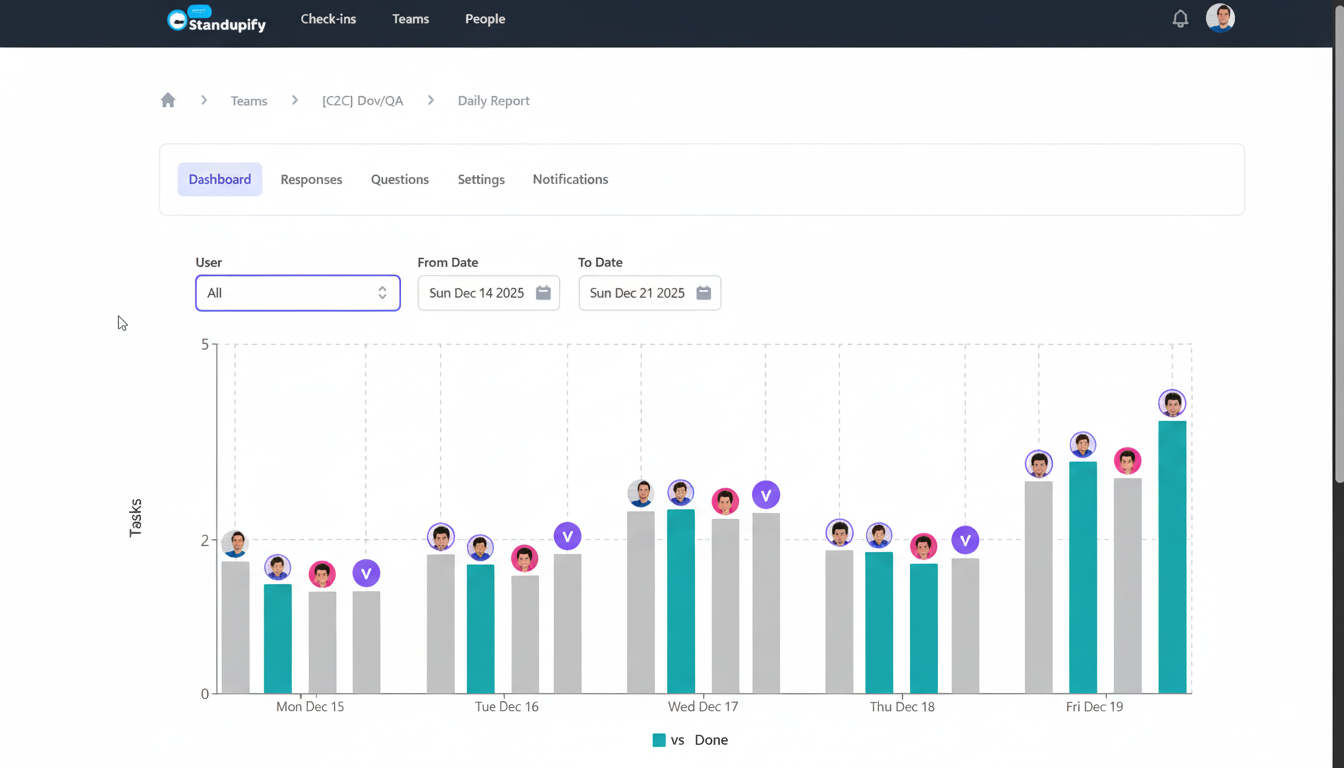
Such a tool provides structured data, dashboards for quick oversight, and historical context that is invaluable for engineering managers and product leads. It transforms fragmented updates into a cohesive, actionable overview of team progress. For insights into how specialized bots can elevate your team's output, I highly recommend reading our post on Mastering Engineering Velocity: Integrating Standup Bots with Software Development Metrics.
4. Seamless Integration is Non-Negotiable
In 2026, no tool lives in a vacuum. The power of any software solution is amplified exponentially by its ability to integrate smoothly with the rest of your tech stack. For agile teams, this means your standup solution must talk to your task tracker. Without this synergy, you're creating data silos and forcing manual data entry – precisely what modern productivity tools aim to eliminate.
A truly effective standup bot integration provides a bridge between your daily updates and your project management system. Imagine a world where blockers reported in standups automatically flag tasks in Jira, or where completed tasks mentioned in updates are instantly reflected in your team's progress metrics. This isn't a pipe dream; it's the reality offered by advanced standup bots.
The value here isn't just convenience; it's about data integrity and real-time visibility. Engineering managers gain an immediate, accurate pulse on project health, identifying potential delays or resource reallocations before they become critical. Product managers can track feature development with unparalleled clarity, and scrum masters can facilitate retrospectives with concrete data points. This level of interconnectedness reduces administrative overhead, minimizes context switching for engineers, and ultimately, accelerates project delivery. For a deeper dive into how this impacts overall team performance, check out our article on Optimizing Team Performance with Google Work Patterns and Standup Bots.
The Future of Standups is Now
The days of lengthy, often unproductive daily standups are, frankly, over. In 2026, the expectation for efficient, data-driven, and highly integrated team processes is not just a 'nice-to-have' but a competitive necessity. By embracing customization, prioritizing focus, choosing specialized tools, and demanding seamless integration, your team can transform its daily standup from a chore into a powerful engine for progress.
Standupify is built precisely on these principles, empowering teams using Google Chat to run truly effective, automated standup meetings that feed directly into their task management systems. It's time to stop just doing standups and start optimizing them. Your team's productivity (and sanity) will thank you.