5 Proven Strategies to Supercharge Team Performance in 2026
In today's fast-paced business environment, optimizing team performance is more critical than ever. Engineering Managers, Team Leads, Scrum Masters, and Product Managers are constantly seeking ways to enhance productivity, streamline workflows, and achieve better results. As we approach 2026, several key strategies have emerged as essential for supercharging team performance. These strategies focus on agility, collaboration, continuous improvement, and leveraging technology to create a more effective and efficient work environment.
1. Embrace Business Agility for Measurable Growth
Agility is no longer just a buzzword; it's a necessity for organizations looking to thrive. The Business Agility Institute's 2025 Business Agility Report reveals that companies with rising agility experienced a significant boost in revenue growth. Specifically, these organizations achieved up to 10.3% revenue growth, compared to the average of 5.1% across all organizations. Those with decreasing business agility lagged behind at just 3.5% (The State of Agility). This data clearly demonstrates that investing in business agility is a direct driver of measurable business results.
However, achieving true business agility requires more than just implementing new processes or frameworks. The report highlights that the top challenges are deeply cultural and systemic, stemming from outdated leadership capabilities, fixed mindsets, and a lack of clear transformation direction. Overcoming these challenges requires a holistic approach that addresses both the technical and human aspects of agility. Consider how traditional software engineering is evolving to embrace agile principles.
Actionable Steps for Enhancing Business Agility:
- Cultivate a Growth Mindset: Encourage experimentation, learning, and adaptation throughout the organization.
- Develop Agile Leadership: Equip leaders with the skills and mindset to empower teams and foster collaboration.
- Define a Clear Transformation Direction: Establish a clear vision for agility and communicate it effectively to all stakeholders.
2. Foster Intentional Collaboration for Enhanced Synergy
The difference between a highly effective team and a mere group of individuals lies in intentional collaboration. While a group of individuals may work together on separate tasks, a team functions as a cohesive unit, sharing knowledge, supporting each other, and working collaboratively towards a common goal (The Difference Between a Team and a Group of Individuals). This collaborative synergy leads to innovative solutions and a stronger commitment to success.
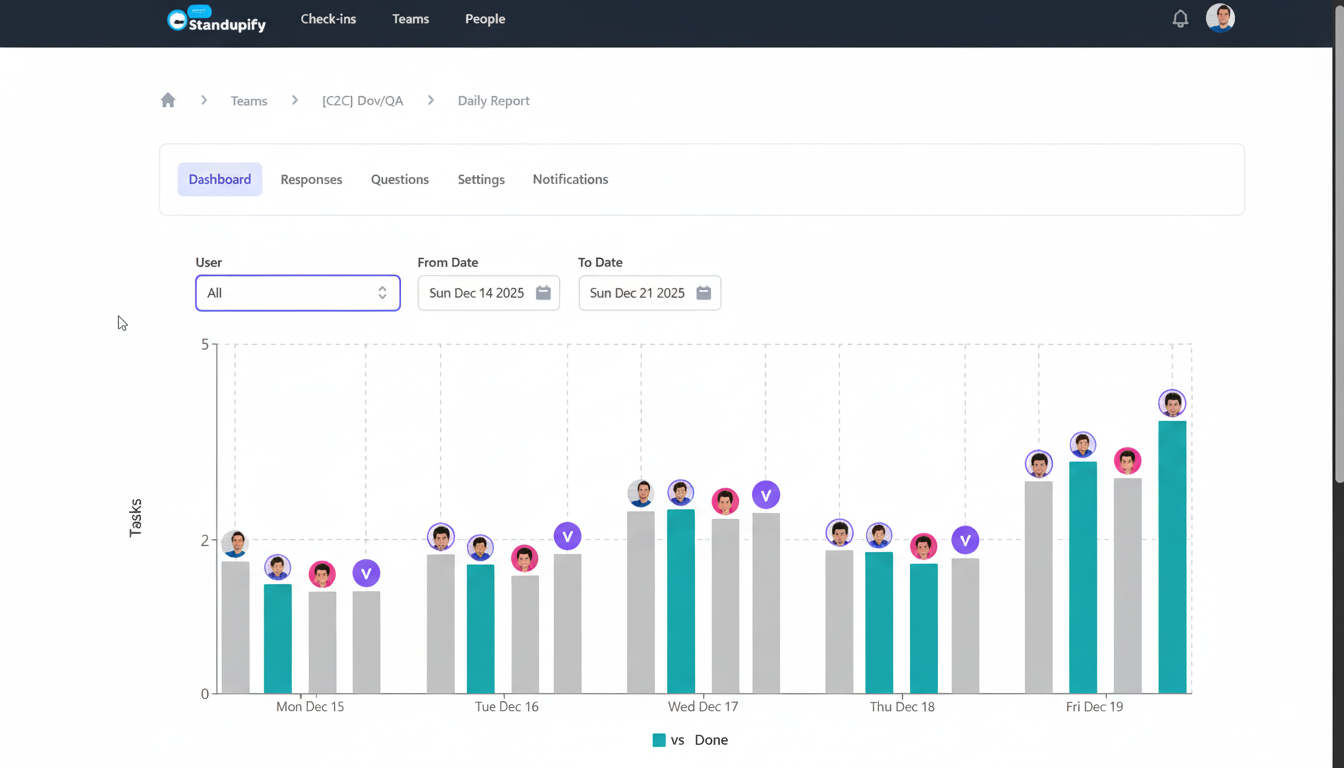
Teams outperform groups because they prioritize collaboration over competition, fostering an environment where ideas are freely shared and problems are solved collectively. This mutual accountability and shared responsibility create a stronger bond and drive better results. Tools like Standupify, which integrates with Google Chat, can facilitate this collaboration by streamlining daily standups and providing a platform for teams to share progress and address blockers efficiently. Furthermore, consider how an AI-powered standup can further revolutionize team productivity.
Strategies for Fostering Intentional Collaboration:
- Establish Clear Communication Channels: Implement tools and processes that facilitate open and transparent communication.
- Encourage Cross-Functional Collaboration: Break down silos and promote collaboration between different departments and teams.
- Promote a Culture of Psychological Safety: Create an environment where team members feel comfortable sharing ideas, asking questions, and taking risks.
3. Embrace Continuous Improvement for Sustained Progress
In today's dynamic environment, continuous improvement is essential for sustained progress. Rather than expecting instant changes, organizations should embrace an incremental and iterative approach to improvement. As highlighted in The Power of Continuous Improvement, change takes time and effort, and it rarely goes as planned. Therefore, creativity, innovation, and patience are crucial for successful change initiatives.
Scrum, with its iterative nature, provides a framework for continuous improvement. By starting with a team that can deliver at least some limited value and incrementally inspecting and adapting, organizations can gradually refine their processes and practices. This approach allows teams to learn from their experiences and make adjustments along the way, leading to more effective and sustainable improvements.
Key Elements of Continuous Improvement:
- Regular Retrospectives: Conduct regular retrospectives to identify areas for improvement and develop action plans.
- Experimentation and Learning: Encourage teams to experiment with new approaches and learn from both successes and failures.
- Data-Driven Decision Making: Use data to track progress, measure the impact of changes, and inform future decisions.
4. Optimize Refinement Sessions for Better Story Quality
Backlog refinement is a crucial activity in Agile, but it can often be time-consuming and unproductive. To address this, teams should rethink their refinement sessions to achieve better outcomes in less time. This involves focusing on creating clear and concise user stories that align with customer value. By maintaining well-groomed backlogs and ensuring that stories are easily understood, teams can improve their planning and predictability (Rethink the Refinement Session: Less Time, Better Outcomes).
Strategies for Optimizing Refinement Sessions:
- Prioritize User Value: Focus on defining user stories that deliver maximum value to customers.
- Keep Stories Concise: Break down large stories into smaller, more manageable tasks.
- Involve the Right People: Ensure that all relevant stakeholders participate in refinement sessions.
5. Leverage AI to Augment, Not Replace, Agile Teams
Artificial intelligence (AI) is rapidly transforming the way teams work, and agile teams are no exception. However, AI is not meant to replace agile teams; rather, it should be used to augment their capabilities and enhance their productivity. As stated by Mountain Goat Software, AI increases the need for great agile teams (AI Doesn’t Eliminate Agile Teams — It Increases the Need for Great Ones).
By automating repetitive tasks, providing data-driven insights, and facilitating better communication, AI can free up agile teams to focus on more strategic and creative work. For instance, AI-powered tools can assist with backlog management, story estimation, and even daily standups, allowing teams to work more efficiently and effectively. This is similar to how Standupify uses AI to create higher impact.
Ways to Leverage AI in Agile Teams:
- Automate Repetitive Tasks: Use AI to automate tasks such as data entry, report generation, and testing.
- Gain Data-Driven Insights: Leverage AI to analyze data and identify patterns that can inform decision-making.
- Enhance Communication: Use AI-powered tools to facilitate better communication and collaboration among team members.
By embracing these five strategies, organizations can supercharge their team performance in 2026 and achieve measurable business results. Agility, collaboration, continuous improvement, optimized refinement, and AI augmentation are the keys to unlocking greater productivity, efficiency, and success.