Boost Team Throughput: How to Achieve Flow Efficiency Without Endless Meetings
Most organizations pride themselves on being busy. Calendars are packed, meetings are stacked, and dashboards glow with activity. But there’s a critical distinction between being busy and being effective—and in today’s rapidly evolving tech landscape, particularly in 2026, mistaking one for the other is a costly error. Many teams are caught in a trap, believing that keeping every resource 100% utilized drives productivity. I’m here to tell you, as a veteran in the trenches of team dynamics, that this belief is not just misguided—it’s actively sabotaging your team’s throughput.
The Illusion of Constant Busyness: Why Resource Efficiency Fails
It’s a deeply ingrained assumption: if everyone is busy, they must be productive. This mindset, often called resource efficiency, focuses on maximizing the utilization of individual team members. On the surface, it seems logical. Keep engineers coding, designers designing, and QA testing, and you’ll get more done, right? Wrong. As Ken Rubin insightfully points out, prioritizing resource efficiency may be the very thing holding you back. This approach often leads to:
- Increased Lead Times: Work sits in queues, waiting for the next 'available' person, even if that person isn't truly ready to pick it up without context switching.
- Context Switching Hell: Constantly jumping between tasks to keep busy fragments focus, reducing the quality and speed of work completion. A study by the American Psychological Association found that even brief interruptions can double the error rate.
- Burnout and Frustration: Teams feel overwhelmed by the sheer volume of 'in-progress' items, leading to decreased morale and higher turnover.
The goal isn't to be busy; it’s to deliver value. And value delivery thrives on a different kind of efficiency.
Embracing Flow Efficiency: Optimizing for Value Delivery
Instead of resource efficiency, we should be relentlessly pursuing flow efficiency. This concept shifts the focus from individual utilization to optimizing how work moves seamlessly through your system, from idea generation to impact. It’s about minimizing delays, reducing bottlenecks, and ensuring a smooth, predictable stream of completed work.
You can’t improve what you don’t measure. To truly understand and enhance your team's flow, you need data-informed decisions. Key metrics for tracking flow, as highlighted by Innolution's guidance, include:
- Cycle Time: The time it takes for a work item to go from 'in progress' to 'done'. Shorter cycle times indicate better flow.
- Lead Time: The total time from when a request is made to when it's delivered. This is the ultimate measure of speed to market.
- Throughput: The number of items completed per unit of time. A higher, stable throughput indicates a healthy, flowing system.
- Work in Progress (WIP): The number of items currently being worked on. Keeping WIP low is crucial for reducing context switching and improving focus.
By focusing on these metrics, you gain a clear picture of where work is getting stuck and can take targeted action to unblock it. This is where your daily standups become absolutely critical.
Daily Standups: From Time Sink to Flow Accelerator
For many teams, the daily standup is a necessary evil—a ritual that often drags on, delves into problem-solving, and leaves participants feeling more drained than informed. But it doesn't have to be this way. When executed with standup best practices, the daily standup is the heartbeat of a flow-efficient team.
The core purpose of a standup is to synchronize the team, identify blockers, and ensure everyone understands the path to achieving the sprint goal. It should be brief, focused, and forward-looking. However, traditional, synchronous meetings often struggle with:
- Time Zone Challenges: Distributed teams find it hard to find a common meeting time.
- Meeting Fatigue: Another meeting on an already packed calendar.
- Lack of Focus: Discussions veering off-topic, leading to extended durations.
- Uneven Participation: Some dominate, others stay silent, leading to missed insights.
This is precisely where automation steps in to transform your routine into a true flow accelerator.
Standupify: Your Google Chat Productivity Bot for Seamless Flow
Imagine a standup that's always on time, incredibly focused, and extracts exactly the information you need, without pulling everyone into a synchronous meeting. That’s the power of Standupify, your dedicated Google Chat productivity bot. We’ve engineered Standupify to streamline your daily check-ins, integrating seamlessly with your task tracking systems (like Jira, GitHub, Asana, and more) directly within Google Chat.
Here’s how Standupify helps you implement standup best practices and boost flow efficiency:
- Asynchronous Reporting: Team members provide updates at their convenience, eliminating time zone issues and meeting fatigue. This allows for deep work without interruption.
- Structured Updates: Standupify prompts for key information (What did I do yesterday? What will I do today? Any blockers?), ensuring brevity and relevance.
- Automated Task Integration: Updates are automatically linked to your task tracker, providing real-time visibility into progress and WIP. This transparency is crucial for identifying bottlenecks.
- Blocker Identification: Critical impediments are flagged immediately, allowing leads and managers to intervene proactively, preventing minor issues from becoming major roadblocks to flow.
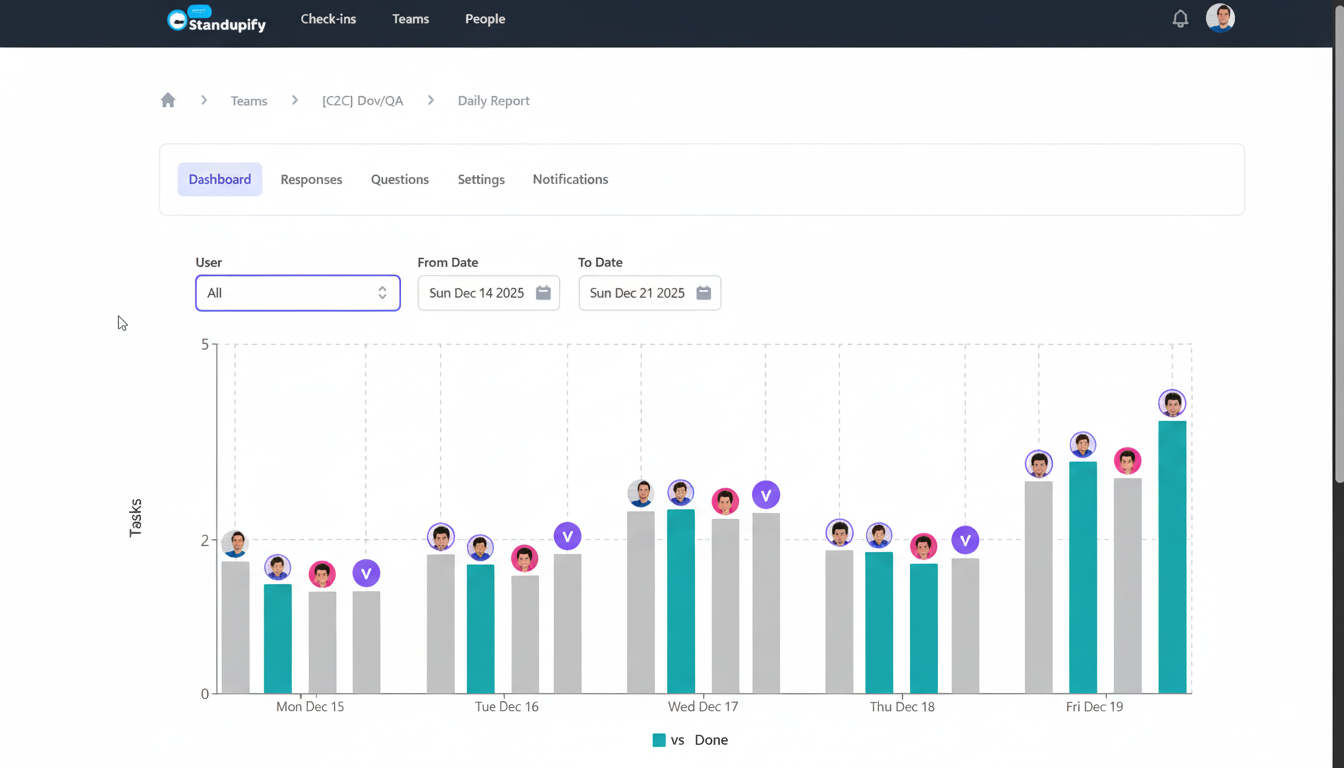
- Data-Driven Insights: By centralizing standup data, Standupify provides analytics on team progress, common blockers, and even individual contributions, helping you measure and improve your flow metrics.
By automating the collection of essential standup information, Standupify frees up valuable synchronous meeting time for genuine problem-solving and collaboration, rather than mere status updates. It’s about making your meetings more effective, not just fewer.
Cultivating a Flow-Centric Culture Beyond the Standup
While an efficient standup is vital, achieving true flow efficiency requires a broader cultural shift. As an Engineering Manager or Team Lead, your role extends beyond tools to fostering an environment where flow can thrive. This involves:
Establishing Clear Working Agreements
High-performing teams don't just happen; they're built on clear expectations. Working agreements are a set of shared norms that a team collaboratively creates and agrees to follow, defining how they will interact. As Agile Learning Labs emphasizes, these agreements are the foundation of trust, respect, and effective teamwork. Examples include 'Arrive on time to meetings,' 'Practice empathy,' or 'Use Slack for primary communication.' These seemingly simple rules reduce friction and allow work to flow more smoothly by minimizing misunderstandings and behavioral ambiguities.
Strategic Spillover Management
What happens when a task isn't completed in a sprint? The knee-jerk reaction is often to just roll it over to the next. However, this can mask deeper issues and artificially inflate your WIP. Agile Learning Labs recommends a different approach: return anything not completed to the product backlog. This forces the Product Owner to re-evaluate its priority. Is it still the most important item? Or have new priorities emerged? This practice ensures that your team is always working on the most valuable items, preventing stale work from clogging your flow.
Empowering Scrum Masters and Product Owners
The roles of Scrum Master and Product Owner are pivotal in championing flow efficiency. A skilled Scrum Master removes impediments and coaches the team on agile principles, while a Product Owner ensures a clear, prioritized backlog that aligns with business objectives. Partnerships like the one between OKR Mentors and TheScrumMaster.co.uk underscore the importance of expert guidance in maximizing agile frameworks to achieve measurable outcomes, which directly translates to improved flow.
The Future of Productivity is Flow-Centric
In April 2026, the competitive landscape demands more than just busy teams; it demands effective, high-throughput teams. Shifting your focus from resource efficiency to flow efficiency isn't just a best practice; it's a strategic imperative. By implementing standup best practices facilitated by a powerful Google Chat productivity bot like Standupify, you can transform your daily rituals from mundane status updates into powerful engines for progress.
It's time to stop mistaking activity for achievement. Embrace data-driven decisions, empower your teams with clear agreements, and leverage smart automation to cultivate a culture where work flows, value is delivered consistently, and your team's true potential is unlocked. The path to sustained productivity and innovation starts with optimizing your flow.