The Future of Agile Team Productivity: What to Expect in 2027
If 2026 taught us anything, it's that static approaches to team productivity are relics of the past. The landscape of work continues its rapid evolution, fueled by distributed teams, an insatiable demand for rapid iteration, and the ever-present pressure to deliver more with less. As we stand at the threshold of October 2026, peering into 2027, the question isn't whether your agile team needs to adapt, but how it will proactively embrace the shifts to thrive. For engineering managers, team leads, scrum masters, and product managers, understanding these future trends isn't just about staying competitive; it's about building resilient, high-performing teams that consistently deliver value.
The coming year will solidify the move away from rigid processes towards a more fluid, human-centric, yet data-driven approach to agile. It's about optimizing every interaction, empowering every team member, and leveraging technology to amplify human potential, not replace it. Let's delve into the core pillars that will define the most productive agile teams in 2027.
Cultivating Unshakeable Team Health and Psychological Safety
At the heart of every successful agile endeavor lies a healthy, psychologically safe team. This isn't a fluffy HR concept; it's the bedrock of innovation and sustained output. Google's Project Aristotle famously underscored the critical role of psychological safety, a concept popularized by Amy Edmonson, as the single most important factor for team success. Without it, team members hesitate to take risks, share ideas, or admit mistakes, stifling creativity and problem-solving.
Working Agreements: The Unsung Hero of Cohesion
In 2027, the emphasis on explicit team norms will become paramount. Unspoken rules create ambiguity and friction, especially in hybrid or remote environments. This is where working agreements step in as a powerful, yet often underutilized, tool. These shared commitments, crafted and agreed upon by the team, govern how members interact, communicate, and collaborate. Examples like 'practice empathy,' 'listen actively,' or 'arrive on time to meetings' may seem simple, but their collective impact on team cohesion and trust is profound. They bring clarity to expectations, fostering a respectful and collaborative environment that is essential for high performance.
Continuous Assessment: Beyond the Scorecard
To truly understand and nurture team health, continuous, objective assessment is non-negotiable. Tools like the Team Health Assessment provide a structured starting point, moving beyond mere outcomes to examine the environment, team member sentiment, and factors such as Dan Pink's autonomy, mastery, and purpose. We strongly recommend conducting such assessments every three months or so, allowing teams to monitor progress and adapt their strategies. Similarly, a Scrum Scorecard can help teams objectively evaluate their scrum implementation, identifying specific areas for improvement in their agile practices.
Streamlining Agile Ceremonies for Maximum Impact
Agile ceremonies are the heartbeat of a development cycle, but if not managed efficiently, they can become time sinks rather than value generators. The future demands leaner, more focused ceremonies, particularly the daily standup.
The Evolution of Standups: From Ritual to Real-time Insight
Traditional, synchronous daily standups, while valuable, often struggle with time zone differences, scheduling conflicts, and the tendency to devolve into lengthy problem-solving sessions. In 2027, the focus will squarely be on maximizing standup team efficiency. This means leveraging technology to gather updates asynchronously, ensuring that every team member's contribution is captured without consuming valuable synchronous meeting time.
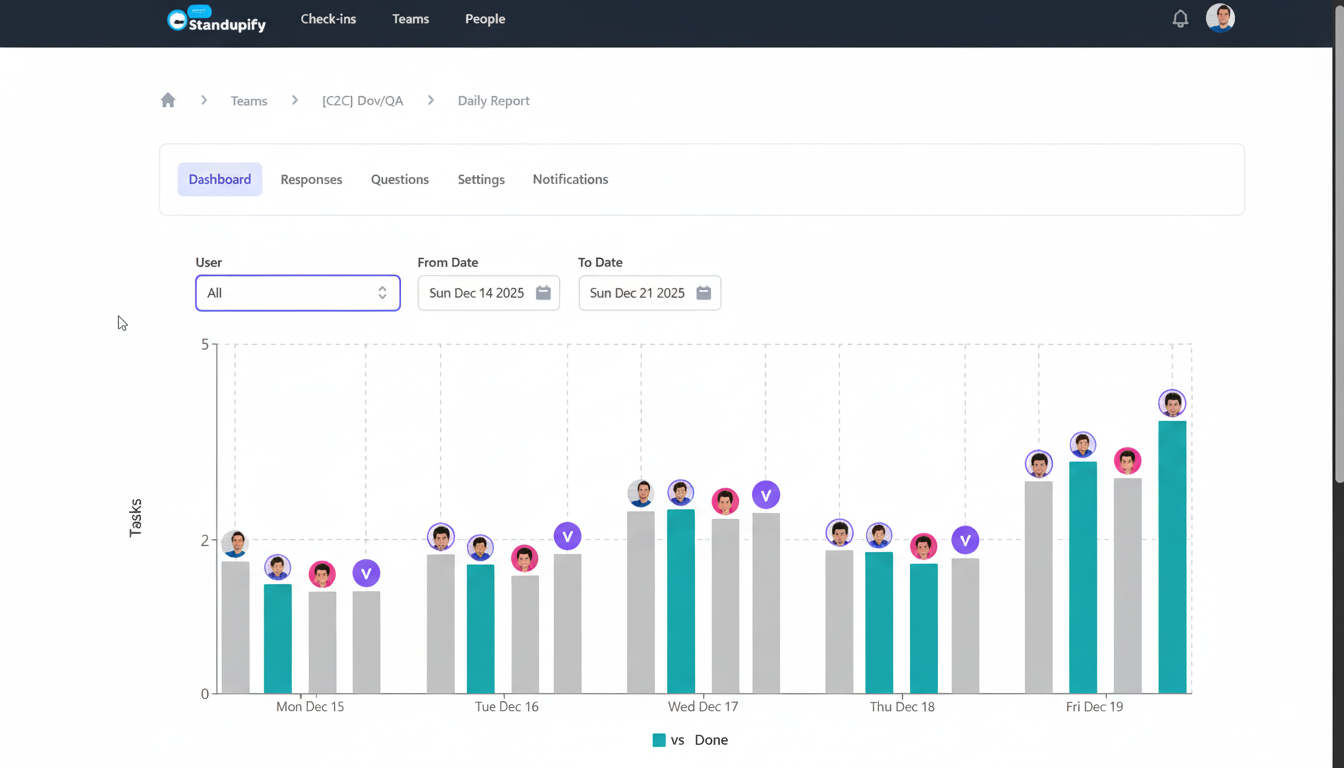
Imagine a world where your daily standup updates are provided proactively, integrated directly with your task tracker, and summarized for immediate review by team leads and product managers. This is the promise of a sophisticated scrum meeting bot. Rather than spending 15 minutes or more daily in a live meeting, a bot can collect 'What I did yesterday,' 'What I'll do today,' and 'Any blockers?' asynchronously via Google Chat. This not only frees up valuable time but also provides a persistent, searchable record of progress and potential impediments, allowing teams to address blockers faster and maintain momentum. For teams looking to streamline their operations, integrating solutions like Standupify with existing platforms, much like Streamlining Shopify Operations with Google Sheets Integration and Google Chat Standups, will be key to unlocking new levels of productivity.
Optimizing Sprint Reviews and Backlog Management
Beyond standups, other agile ceremonies are ripe for optimization. Sprint reviews, for instance, are critical for gathering feedback and ensuring alignment, but they need to be effective. An assessment tool for sprint reviews can help teams identify weaknesses and make these sessions more valuable, ensuring they contribute to higher ROI. Furthermore, efficient backlog management is crucial to prevent waste. When user stories spill over from one sprint to another, the best practice, as detailed in recent agile guidance, is to return unfinished items to the product backlog. This allows the product owner to re-evaluate their priority, preventing the automatic carry-over of tasks that may no longer be the most valuable, and giving developers the chance to re-commit with fresh capacity and confidence.
The Role of Automation and AI in 2027
The future of agile team productivity isn't just about better human processes; it's about intelligent automation. A scrum meeting bot like Standupify isn't merely a convenience; it's a strategic asset. By automating daily standup reminders and collection, integrating seamlessly with task trackers, and providing instant visibility into team progress and blockers within Google Chat, these tools dramatically boost standup team efficiency.
Consider the cumulative time saved across a large organization by reducing synchronous standup time by even 10 minutes per day per team. This translates into hundreds, if not thousands, of hours reclaimed annually for actual development work. Furthermore, the aggregated data from automated standups provides invaluable insights for managers, highlighting trends, identifying persistent blockers, and informing resource allocation without requiring manual data compilation. This kind of automation enables teams to focus on creative problem-solving and delivery, rather than administrative overhead. For teams seeking to enhance their workflow, leveraging such tools can be as impactful as learning to Streamline Content: How to Convert Reddit Thread to Blog Post for Google Chat Teams, by transforming a tedious process into an efficient one.
Preparing for the Productive Future
The path to superior agile team productivity in 2027 is clear: invest in your team's health, streamline your agile ceremonies with purpose, and strategically leverage automation. By fostering psychological safety through explicit working agreements, continuously assessing team and scrum health, and embracing intelligent tools like Standupify to optimize daily standups and task tracking, your team won't just keep pace – it will lead. The future is about working smarter, not just harder, and the tools and practices are already here to help you build the high-performing team of tomorrow.