Unlock Peak Productivity: Streamline Agile Workflows and Drive Outcomes, Not Just Output
We're already in July 2026, and if your engineering teams feel perpetually swamped, yet their throughput isn't consistently improving, you're not alone. The conventional wisdom of 'keeping everyone busy' is, frankly, dead weight. It’s a relic of a bygone era, actively sabotaging your team's potential for true effectiveness and innovation. As a Senior Tech Writer at Standupify, I've seen firsthand how many organizations, despite good intentions, inadvertently create a maze of complexity that stifles the very agility they seek.
The truth is, most organizations don't struggle from a lack of practices, frameworks, or tools. Instead, they're hampered by a mindset and culture that relies too heavily on rigid plans, ill-suited for our complex and constantly changing world. They're still mentally stuck in the previous century, where the focus was solely on how fast tasks could be delivered, rather than the actual impact of that delivery. This isn't just an observation; it's a critical flaw highlighted by leading agile coaches, who note that many organizations are failing to be successful with Agile because they confuse output with outcome. As Zuzi Sochova, a Certified Scrum Trainer, puts it, they are structured like machines, optimized for delivery, where speed and output reign supreme.
The Illusion of Busyness: Why More Isn't Always Better
It’s a common sight: calendars packed, meetings stacked, and dashboards glowing with activity. Organizations often pride themselves on this state of constant motion. Yet, there’s a critical distinction between being busy and being effective. In fact, the relentless pursuit of resource efficiency – keeping every team member 100% utilized – can paradoxically kill your throughput. Ken Rubin, a respected voice in the agile community, argues that this deeply ingrained assumption is often the very thing holding teams back. The pressure to always be 'doing' can lead to context switching, increased wait times, and a general lack of flow, making it harder to complete valuable work.
This isn't just about individual productivity; it's about systemic issues. Many organizations have experienced an enormous growth of processes, structures, roles, and tools over the past decades. While intended to gain control, this accumulation often creates a complex mess, wiring organizations into an inflexible state where meaningful change becomes nearly impossible. Simplicity, as Sochova emphasizes, is the key to success. Without it, you end up with an interdependent, fixed environment that resists adaptation – a death knell for agility in 2026.
Shifting the Paradigm: From Output to Outcome in an AI-Enhanced World
The rise of AI has only amplified this distinction between output and outcome. In today's complex environment, AI can help you generate output super fast. Delivery is no longer the bottleneck. You can have as much output as you want in almost no time. This means that merely quicker delivery is irrelevant if what's being delivered doesn't create real value. Organizations must adapt their structure to be more outcome-oriented. This shift requires expanding skills and mandates, moving from simply 'doing' the work to actively 'driving' towards desired results.
This means rethinking how we manage and track progress. For engineering teams, it means focusing on the impact of their code, not just the lines written or tickets closed. Are your teams actually getting better? It's a simple question that not enough technology leaders are asking, according to Adam Whaley, Principal Engineer at LiminalArc. This foundational question is crucial for understanding if your efforts are truly translating into progress. We explored how to navigate these shifts and drive team cohesion in a recent post: How to Drive Team Productivity and Cohesion Amidst 2026's Automation and Workforce Shifts.
Embracing Simplicity: The Agile Path to Real Throughput
The solution isn't more complexity; it's less. Organizational agility aims to simplify processes back to a very lean and flexible minimum. This is where tools and practices that truly streamline workflows come into play, rather than adding to the administrative burden. Daily standups, for instance, are designed to be quick, focused opportunities for teams to synchronize and identify blockers. But even these can become bloated and ineffective if not managed properly.
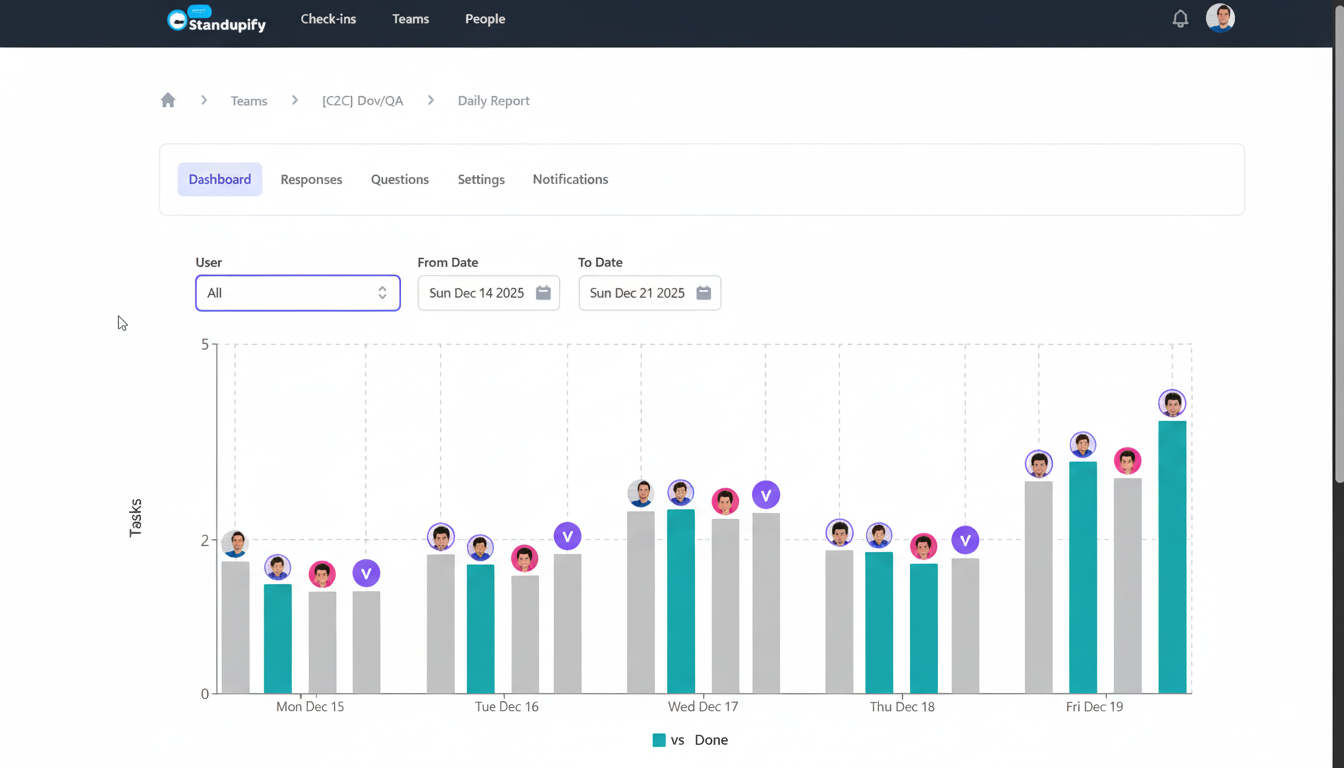
Imagine an engineering standup bot that automates the collection of updates, integrates directly with your task tracker, and keeps the meeting concise and asynchronous where possible. This isn't just about convenience; it's about reclaiming valuable developer time and ensuring that standups are genuinely contributing to progress, not just consuming it. Such a bot transforms standups from a mandatory chore into a powerful data-gathering and communication hub, making it easier for teams to focus on actual development.
Leveraging Smart Tools for Leaner Workflows
At Standupify, we believe in empowering teams to achieve true flow efficiency. Our Google Chat bot is designed specifically to cut through the noise and provide clear, actionable insights into team progress. For instance, seamless google chat jira integration means updates from daily standups automatically populate your task management system, eliminating manual data entry and ensuring everyone is always on the same page. This level of automation is critical for any distributed team striving for peak performance in 2026.
Consider the benefits: Less time spent on administrative overhead, more time dedicated to high-value coding and problem-solving. This is the essence of outcome-driven development – where every tool and process serves to accelerate the delivery of value, not just activity. We've seen how integrating automation can supercharge dev team productivity, as detailed in our article: How Auto Post to WordPress AI Supercharges Dev Team Productivity with Google Chat Standups.
The Road Ahead: Redefining Productivity
For Engineering Managers, Team Leads, Scrum Masters, and Product Managers, the message is clear: true productivity in 2026 isn't about maximizing busyness or piling on more processes. It's about a relentless pursuit of simplicity, a laser focus on outcomes, and the strategic leverage of smart automation. It requires a cultural shift away from the 'manufacturing line' mentality towards one that fosters adaptability and continuous improvement.
By consciously challenging deeply ingrained assumptions about efficiency and embracing tools that promote lean, outcome-oriented workflows, you can unlock your team's full potential. Stop asking how to keep people busy, and start asking how to empower them to deliver meaningful impact. The path to peak productivity is paved with clarity, not complexity.