Unlock Peak Team Productivity: The Synergy of Working Agreements and Automated Standups
In the fast-paced world of software development and complex project management, achieving consistent team productivity often feels like chasing a mirage. We invest in cutting-edge tools, refine our processes, yet friction persists, deadlines loom, and the promise of seamless collaboration remains just out of reach. As a Senior Tech Writer at Standupify, I’ve seen firsthand that the real secret to unlocking peak performance isn’t just about having the right tools; it’s about how your team interacts with those tools and, more fundamentally, with each other. By August 2026, the most successful teams aren’t just automating tasks; they’re automating intelligent, agreed-upon interactions. Today, I want to talk about how the powerful synergy of well-defined working agreements and sophisticated automated standups can transform your team’s output, collaboration, and overall morale.
The Unseen Friction: Why Teams Struggle (Even with Tools)
Think about it: how many times has a project stalled not because of technical hurdles, but due to miscommunication, unclear expectations, or a general lack of alignment on “how we do things here”? These unspoken rules, or the lack thereof, breed inefficiency. While the Agile Manifesto famously values “individuals and interactions over processes and tools,” it’s easy to get caught up in the latter, hoping a new piece of software will magically solve all our problems. But a tool, no matter how advanced, can’t fix a broken communication culture.
Some might even argue, as TheScrumMaster.co.uk once posited, that teamwork itself can be “overrated” for solopreneurs. And sure, for individuals working in isolation, the overhead of coordination can be a drag. But for complex work—the kind that requires diverse skills, perspectives, and continuous adaptation—teamwork is not just rated, it’s essential. The challenge, then, isn’t to avoid teamwork, but to make it profoundly effective. This is precisely where working agreements step in.
Working Agreements: The Foundation of High-Performing Teams
What if every team member had a crystal-clear understanding of how to collaborate, communicate, and resolve conflicts? That’s the promise of working agreements. As Agile Learning Labs eloquently puts it, working agreements are “a set of shared norms that a team creates together and agrees to follow.” These aren’t rules imposed from above; they are co-created principles for human interaction within the team.
The impact of these seemingly simple agreements on team cohesion is profound. They bring those “unspoken rules” to the surface, transforming potential misunderstandings into shared clarity. Examples from real teams include:
- Practice empathy and listen actively.
- Arrive on time to all scheduled meetings.
- Use specific channels (e.g., Google Chat) for primary communication.
- Make time for fun and connection.
By defining these behaviors, teams build a shared vision of what “high-functioning” looks like. This process isn’t just an exercise; it’s the bedrock of trust, respect, and genuinely effective teamwork, aligning perfectly with the Agile principle of “continuous collaboration over up-front negotiation” from the Agile Manifesto for Complex Work.
Automated Standups: Precision and Efficiency in Action
Once your team has established a strong foundation of how they want to work together, it’s time to supercharge that collaboration with the right tools. This is where automated standups, particularly through a robust Google Chat team bot like Standupify, become invaluable. Traditional, synchronous standups can be time sinks, especially for distributed or global teams. “Going around the room” can eat up precious development time, and updates often lack the necessary detail or context.
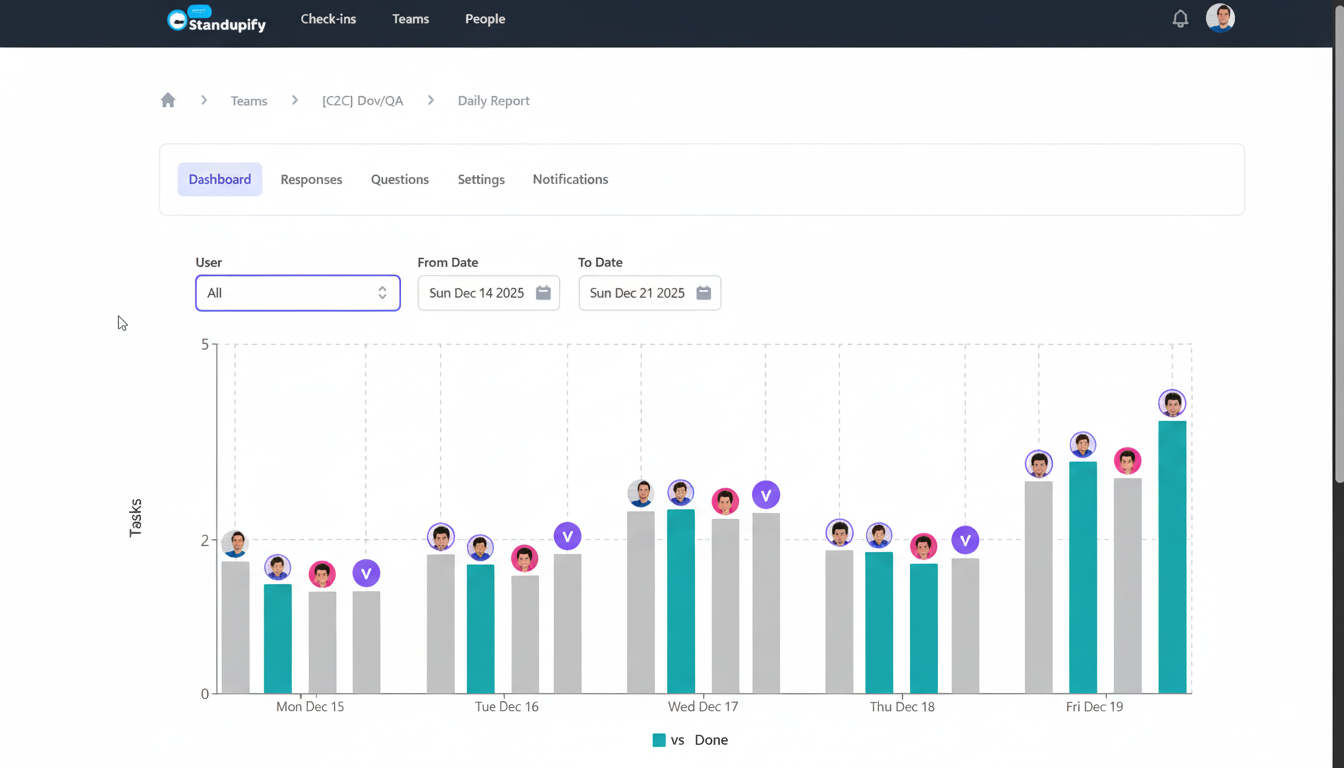
Automated standups streamline this critical daily ritual. Instead of a synchronous meeting, team members submit their updates asynchronously via Google Chat. This not only saves time but also encourages more thoughtful, concise reporting. Standupify, for example, collects responses on progress, blockers, and plans, then compiles them into a digestible summary for the entire team. This process makes it incredibly easy to identify blockers quickly and understand team progress without interrupting flow states. Furthermore, with its advanced standup issue tracker integration, Standupify can pull relevant task data directly from your project management system, giving everyone a comprehensive view of work in progress against actual tickets.
The efficiency gains are undeniable. For marketing teams, for instance, automating these daily check-ins can significantly boost overall campaign velocity, as discussed in our recent post, Maximizing Marketing Productivity with HubSpot AI Content Automation and Automated Standups.
The Synergy: Working Agreements + Automated Standups
Here’s where the magic truly happens. Neither working agreements nor automated standups achieve their full potential in isolation. Their synergy is what drives unparalleled team productivity.
Imagine a team with a working agreement that states: “All blockers must be clearly articulated with proposed next steps in daily standup updates.” An automated Google Chat team bot like Standupify can be configured to prompt for exactly this information. The bot reinforces the agreement, and the agreement ensures the bot’s output is maximally useful. The team agrees to use the standup issue tracker features diligently, ensuring that every reported blocker is linked to a relevant task, making follow-up instantaneous.
This combined approach fosters:
- Enhanced Clarity: Agreements define what to report and how. The bot ensures it happens consistently.
- Reduced Friction: Fewer misunderstandings about communication channels or expectations.
- Faster Problem Resolution: Blockers are identified and addressed quicker because the information is structured, consistent, and immediately visible through the issue tracker integration.
- Stronger Accountability: When expectations are clear and progress is transparent, individual and collective accountability naturally increases.
- Greater Adaptability: Teams can more effectively “respond to change over following a plan,” a core Agile value, because they have real-time, agreed-upon insights into their evolving work.
Implementing the Synergy: A Practical Roadmap
Ready to supercharge your team’s performance? Here’s how to implement this powerful synergy:
Step 1: Craft Your Working Agreements
Don’t just copy a template. Facilitate a dedicated session where your team collaboratively defines their norms. Start with a few core agreements around communication, meeting etiquette, and how to handle disagreements. Remember, these are living documents that should be reviewed and refined periodically. Focus on behaviors that will directly impact your daily interactions, including how you’ll leverage your standup tool.
Step 2: Integrate Your Automated Standup Bot
Deploy Standupify as your dedicated Google Chat team bot. Configure it to ask questions that align with your newly established working agreements. For instance, if an agreement is “all updates must be concise and actionable,” train your team to use the bot’s prompts effectively to meet this standard. Set consistent timings for updates to maintain rhythm.
Step 3: Leverage Task Tracker Integration
Ensure your Standupify setup fully utilizes its standup issue tracker capabilities. Integrate it with your preferred task management system (Jira, GitHub, Asana, etc.). This means team members can link their updates directly to tickets, providing rich context and making it easier for managers and leads to follow up on progress and blockers without leaving Google Chat. This is crucial for maintaining a comprehensive view of team progress.
Step 4: Review and Refine
Working agreements are not set in stone, and neither is your use of automation. Regularly (e.g., quarterly or during retrospectives) revisit your agreements. Are they still serving the team? Is the bot configured optimally? As we look towards 2027 and the evolving landscape of AI agent autonomy, as discussed in The Future of Team Productivity: Navigating AI Agent Autonomy in Standups and Beyond (2027 Outlook), it’s vital to keep adapting your practices and tools.
Conclusion
Achieving peak team productivity isn’t an elusive goal. It’s the direct result of intentional design: combining the human-centric approach of working agreements with the efficiency of automated tools. By fostering a culture of clarity, respect, and proactive communication through agreed-upon norms, and then empowering that culture with a smart Google Chat team bot and its robust standup issue tracker, you create an environment where teams thrive, friction dissipates, and complex work moves forward with unprecedented velocity. Stop chasing productivity and start building it, one agreement and one automated standup at a time.