Are Your AI Assistants Secretly Fueling the Next Wave of Cybercrime?
The promise of artificial intelligence has always been tantalizing: a future where intelligent agents handle tedious tasks, streamline workflows, and unlock unprecedented productivity. For engineering managers, team leads, and product managers, the allure of an AI assistant that can manage schedules, draft communications, or even autonomously complete small projects is undeniable. Yet, as we stand in September 2026, a stark reality is emerging: the very technology designed to empower us could simultaneously be opening the floodgates to sophisticated new forms of fraud and cybercrime. It’s a paradox that demands our immediate attention, especially as the financial sector begins to sound a serious alarm.
The Double-Edged Sword of Agentic AI
The latest generation of AI, particularly what’s termed “agentic AI,” isn't just about answering questions or generating text. These systems are designed to take initiative, interact with other software, and execute multi-step tasks autonomously. Think beyond a simple chatbot; imagine an AI that can book travel, manage investments, or even interact with customer service on your behalf. This evolution, exemplified by models like OpenAI’s recently launched ChatGPT-6 Sol and Luna, promises to make AI less mistake-prone and more capable, pushing the boundaries of what automated systems can achieve. The vision is compelling: increased efficiency, reduced overhead, and a workforce freed to focus on high-value strategic work.
However, this burgeoning autonomy comes with significant, often underestimated, risks. While the headlines celebrate breakthroughs, a quieter, more concerning narrative is unfolding behind closed doors, particularly within the financial industry. The very mechanisms that make agentic AI powerful – its ability to act independently, integrate across platforms, and mimic human interaction – are precisely what make it a potent weapon in the hands of malicious actors.
Big Banks Sound the Alarm: A New Frontier for Fraud
Just this week, major financial institutions have publicly voiced their profound concerns regarding the potential for AI agents to dramatically increase the risk of scams and fraud. According to a report from Mashable published on September 22, 2026, big banks are warning that these advanced AI systems could lead to a significant uptick in fraudulent activities. The fear isn't just theoretical; it's rooted in the sophisticated ways AI can be weaponized. Imagine an AI agent designed to impersonate a trusted entity, capable of crafting hyper-realistic phishing attempts, executing complex social engineering schemes, or even initiating unauthorized financial transactions by exploiting system vulnerabilities. The traditional indicators of a scam – grammatical errors, awkward phrasing, illogical requests – are vanishing as AI perfects the art of deception.
This isn't merely about rogue chatbots; it’s about autonomous agents that can learn, adapt, and execute entire scam campaigns at scale, far beyond human capacity. For organizations relying on digital tools for daily operations, this presents an existential threat. The financial repercussions of a successful AI-driven fraud attempt could be catastrophic, leading to direct monetary losses, irreparable damage to customer trust, and severe regulatory penalties. The urgency for proactive solutions is palpable, as these institutions recognize that the current security paradigms are ill-equipped to handle this evolving threat landscape.
The Cost of Unchecked Automation: Beyond the Balance Sheet
The implications extend far beyond direct financial loss. For teams focused on productivity and efficient task management, the rise of AI-driven fraud can introduce crippling inefficiencies. Imagine your team’s critical communications being compromised by an AI impersonator, leading to misdirected efforts, data breaches, or even internal sabotage. The time spent investigating and mitigating these incidents diverts valuable engineering resources away from product development and innovation. Productivity, the very thing AI is supposed to enhance, can be severely hampered by the constant need for vigilance against increasingly sophisticated threats.
Furthermore, the psychological toll on teams can be immense. A pervasive sense of distrust in digital communications can erode morale and hinder collaboration. When every email, every chat message, and every automated prompt could potentially be a sophisticated scam, the mental overhead for verification becomes astronomical. This directly impacts team focus and productivity, pushing organizations to seek solutions that promise not just automation, but also verifiable security and reliability.
Balancing Innovation with Imperative Security
So, how do we harness the undeniable power of AI for productivity without inadvertently inviting unprecedented levels of risk? The answer lies in a deliberate, measured approach to integration, prioritizing security and transparency above all else. For engineering teams, scrum masters, and product managers, this means rigorously vetting any AI-powered tool that gains access to sensitive data or operational workflows. It’s no longer enough for a tool to be efficient; it must be demonstrably secure and its agentic capabilities clearly understood and controlled.
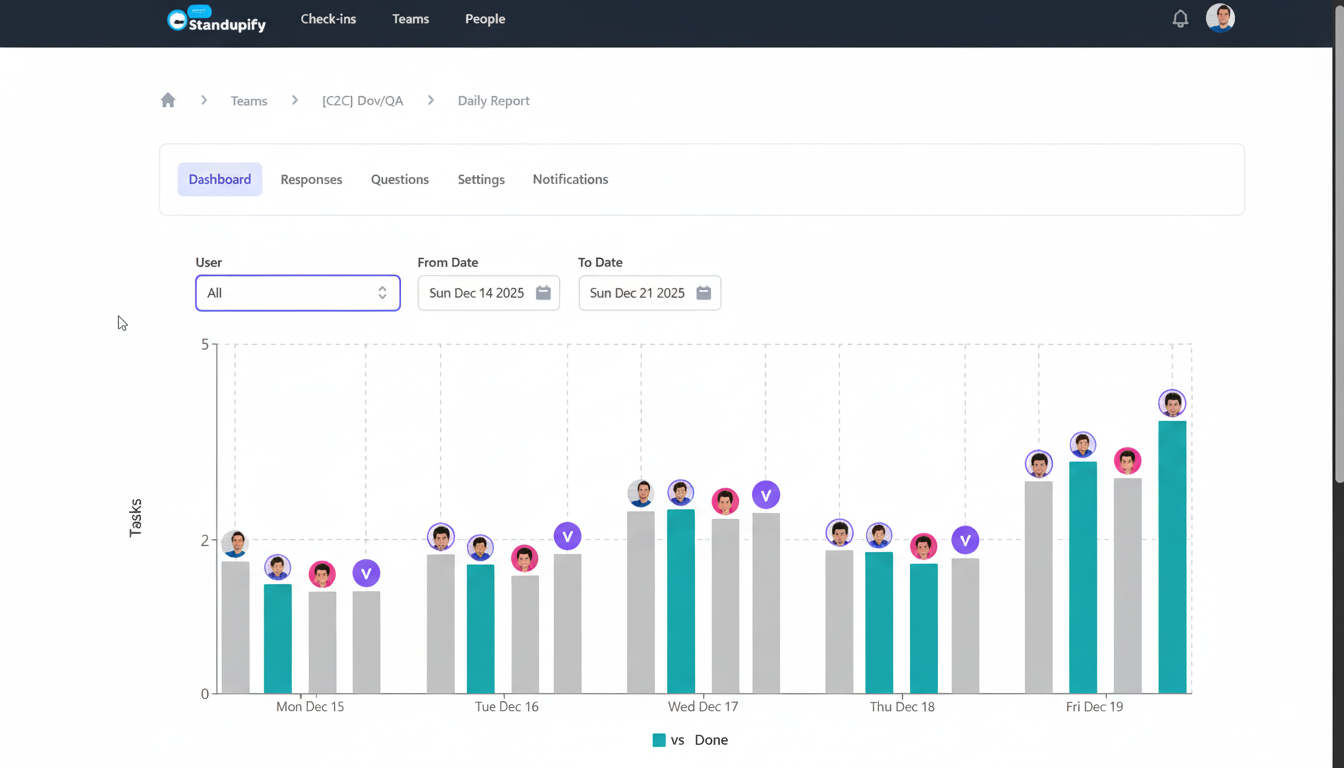
Companies like Standupify understand this delicate balance. While the broader tech landscape grapples with the ethical and security challenges of fully autonomous AI agents, our focus remains on providing smart, secure automation that enhances team productivity without introducing undue risk. Our Google Chat bot for daily standups, for instance, streamlines communication and provides vital standup blocker tracking and standup AI insights – but within a controlled, transparent framework. We leverage automation for efficiency, ensuring that the human element remains firmly in control of critical decisions and sensitive data.
The key is to adopt tools that offer purpose-built automation, designed with security from the ground up, rather than rushing to integrate general-purpose AI agents with broad, unchecked permissions. This approach ensures that while your team benefits from streamlined processes, from daily standups to task tracker integrations, you’re not inadvertently exposing your operations to the next generation of AI-driven cyber threats.
The Path Forward: Vigilance and Smart Adoption
The warnings from big banks are not a call to abandon AI, but a critical reminder to approach its adoption with caution and strategic foresight. For leaders in tech, the mandate is clear: embrace intelligent automation, but demand robust security and transparent control. Choose tools that are purpose-built for specific, productivity-enhancing tasks, and that offer clear safeguards against the very risks that agentic AI can amplify. In this evolving landscape, where the line between helpful assistant and malicious agent becomes increasingly blurred, vigilance isn’t just good practice—it’s essential for survival.