How to Harness AI's Productivity Power Without Drowning in Hidden Costs or Data Risks
The AI revolution isn't just coming; it's here, reshaping how we work, innovate, and even think about team productivity. For engineering managers, team leads, Scrum Masters, and product managers, the promise of AI is tantalizing: unprecedented efficiency, deeper insights, and a future where mundane tasks vanish. But as we stand in August 2026, it’s becoming increasingly clear that this future isn't without its complexities, hidden costs, and ethical minefields. The narratives emerging this year aren't just about breakthroughs; they're about the hard realities of scaling AI, securing data, and safeguarding our teams.
The Soaring Price Tag of AI's Infrastructure
The notion that AI is a cheap, readily accessible resource is a myth that's rapidly being debunked. The underlying infrastructure required to power advanced AI models is experiencing a gold rush-level demand, driving up costs across the board. Take Nvidia, for instance. From early next year, their AI server prices are projected to rise by more than 15% in many cases. This isn't a small adjustment; it’s a significant hike for systems built around their cutting-edge Vera Rubin and Grace Blackwell chips, impacting everyone from tech giants like Microsoft, Google, and Oracle to Europe’s planned AI gigafactories. The culprit? Soaring memory costs. Even with Nvidia boasting a gross margin of about 75%, they're not absorbing these increases, a testament to the immense leverage held by the three dominant DRAM producers: Samsung, SK hynix, and Micron. This isn't just about servers; it's a systemic crunch. The Next Web reported that this memory shortage has already pushed up consumer hardware prices, with Amazon Web Services increasing GPU prices by 20% this year alone.
Beyond Servers: Component Shortages and Supply Chain Woes
The impact of AI's insatiable demand extends far beyond high-end chips. We're seeing a ripple effect down to the most basic components. Chinese carmakers, for example, are reporting a global shortage of 20% to 30% in printed circuit boards and multilayer ceramic capacitors. These are components that cost fractions of a cent, yet their scarcity is causing significant production interruptions. Prices for these essential parts have more than tripled over the past year. Automotive-grade memory, critical for advanced driver assistance systems that can require hundreds of gigabytes, saw an astonishing 180% price increase in just three months. Why? Because Samsung, SK hynix, and Micron are directing over 80% of their advanced-node capacity to AI servers. As The Next Web highlighted, this isn't a financial disruption as much as a physical one, stalling assemblies and delaying production across industries. For any team planning to integrate AI at scale, these supply chain realities are a critical consideration, moving beyond mere software costs to tangible hardware bottlenecks.
The Human Element: Augmentation, Not Annihilation
While the focus often shifts to the technological and financial aspects of AI, we cannot ignore its profound impact on the workforce. The conversation around AI isn't just about efficiency; it's also about job security and the evolving nature of human work. A recent Guardian article shared the stark sentiment of Hollywood creatives who, amid a jobs slump, are taking on temporary work training AI models to replicate their skills. One compared it to “being handed a shovel and asked to dig the grave of my profession.” This powerful quote underscores a growing anxiety: is AI truly a co-pilot, or a replacement?
For engineering managers and team leads, this presents a crucial leadership challenge. The goal shouldn't be to automate every human out of the loop, but to strategically augment capabilities. Instead of fearing AI will drain your team's energy, consider how it can free them from repetitive tasks, allowing them to focus on higher-value, creative problem-solving. This isn't a new concept; effective tools have always aimed to streamline workflows. For instance, understanding whether your daily standups are secretly draining your team's energy is a perennial concern that AI-powered solutions, like a robust daily standup bot for google chat, are designed to address.
The Stealthy Price of "Free": Data Privacy in the AI Era
Perhaps one of the most insidious trends emerging this year is the rise of "free" AI models that come with significant, often opaque, data privacy implications. Consider the anonymous Ox Alpha model that appeared on OpenRouter last week. Impressive to developers with its million-token context window and free usage, it quickly garnered attention. Stripe's CEO, Patrick Collison, even called it “very impressive.” However, the critical detail lies in its terms: OpenRouter’s listing explicitly states that prompts and completions “are retained by the provider and are not used for training.” The catch? Nobody knows who this provider is. As The Next Web highlighted, for European businesses, this isn't an intriguing mystery; it’s a direct blocker due to stringent data protection regulations.
This situation echoes broader concerns about data harvesting, a strategy laid out in trials against major social media companies this year. The “hook, hold, harvest, hide” model, as described by prosecutors, emphasizes how user data can be exploited. When dealing with an anonymous AI provider, the risks are magnified. For any organization, especially those handling sensitive project data or client information, entrusting prompts and completions to an unidentified entity is a non-starter. The allure of “free” must be weighed against the very real and potentially catastrophic costs of data breaches and compliance failures.
Charting a Course: Smart AI Adoption for Agile Teams
Given these complexities, how do forward-thinking teams navigate the AI landscape in late 2026 and beyond? It requires a strategic, informed, and ethical approach:
- Strategic Investment, Not Blind Adoption: Understand the true total cost of ownership, including hardware, energy, and potential compliance overhead. Prioritize AI applications that offer clear, measurable ROI for your team's specific challenges.
- Data Integrity and Transparency: Vet every AI tool rigorously. Understand its data retention policies, where your data resides, and how it's used. Opt for solutions from transparent providers who adhere to robust security and privacy standards.
- Augment, Don't Just Automate: Focus on how AI can enhance human capabilities, reduce cognitive load, and free up your team for more creative, strategic work. This could mean automating the aggregation of daily updates, providing quick summaries, or flagging potential blockers. Tools like an async standup tool, for example, can leverage AI to process updates from team members across time zones, synthesizing key information without requiring synchronous meetings. This is a powerful way to unlock efficiency for agencies and developers, ensuring that AI enhances, rather than complicates, team communication.
- Continuous Learning and Adaptation: The AI landscape is evolving rapidly. Stay informed about new technologies, ethical guidelines, and best practices. Encourage your teams to experiment responsibly and integrate AI thoughtfully into their workflows.
The Standupify Perspective: Smarter Productivity in an AI-Driven World
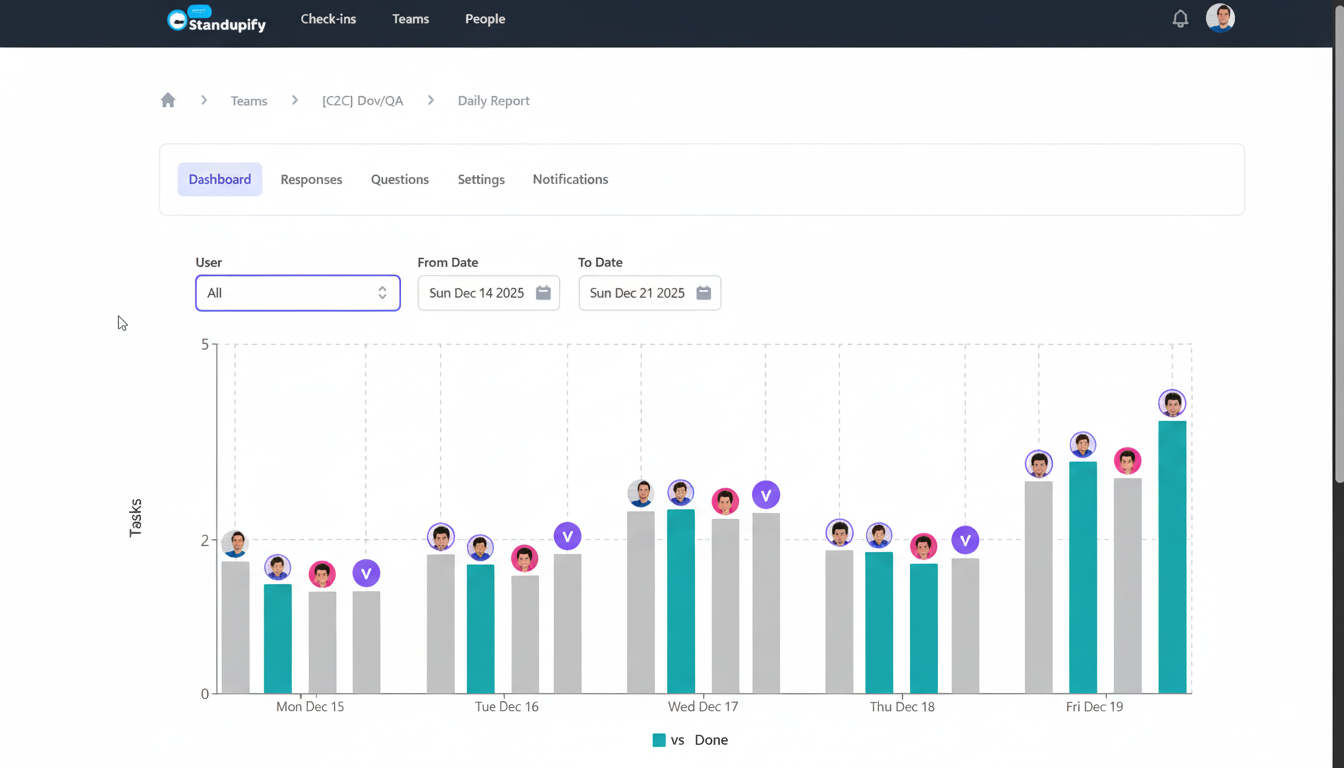
At Standupify, we believe the true power of AI for engineering teams lies in its ability to streamline communication, enhance visibility, and ultimately foster a more productive and engaged workforce. Our Google Chat bot for daily standups with task tracker integration is designed precisely for this purpose. By automating the collection of updates and integrating with your existing task management systems, we free your team from standup fatigue, providing clear insights into progress and blockers. In an era where AI infrastructure costs are soaring and data privacy is paramount, choosing tools that are purpose-built for efficiency, transparency, and seamless integration becomes more critical than ever.
The AI revolution is not a simple path to effortless productivity. It’s a complex journey fraught with financial, ethical, and logistical challenges. But for leaders willing to navigate these waters with foresight and strategic intent, the rewards—in terms of enhanced team performance and innovation—are immense. The key is to be informed, to be cautious, and to always prioritize your team's well-being and data security above the fleeting appeal of unchecked technological adoption.