The Ultimate Guide to Asynchronous Standups for Remote Teams
Introduction to Asynchronous Work
In today's rapidly evolving work landscape, asynchronous communication has emerged as a cornerstone for successful remote and distributed teams. Unlike synchronous communication, which requires real-time interaction (like live meetings), asynchronous work allows team members to contribute and consume information at their own pace, on their own schedule. This shift is not just a trend; it's a strategic move towards more flexible, focused, and inclusive work environments.
The Power of Asynchronous Standups for Remote and Global Teams
For remote and global teams, traditional daily standup meetings often present significant challenges. Coordinating schedules across multiple time zones can be a logistical nightmare, leading to early morning or late-night calls for some team members, reducing productivity and morale. This is where asynchronous standups shine.
- Eliminate Time Zone Headaches: Team members can submit their updates whenever it suits their workday, ensuring everyone participates without sacrificing personal time or deep work hours.
- Boost Deep Work Focus: By replacing scheduled meetings with flexible check-ins, team members gain back valuable time. Studies show that async communication can increase deep work focus time by up to 40%, allowing for more concentrated, high-quality output.
- Standardized Reporting: Asynchronous tools like Standupify standardize the reporting process, ensuring consistent information is collected from everyone, regardless of their location. This makes it easier to track progress and identify trends across multiple time zones.
- Enhanced Inclusivity: Quieter team members or those who need more time to formulate their thoughts can contribute more effectively in an asynchronous format, fostering a more inclusive communication environment.
Implementing Effective Asynchronous Standups
Transitioning to asynchronous standups requires a clear strategy and the right tools. Here’s how to implement them effectively:
- Define Clear Questions: Ensure your standup questions are concise and actionable. Typically, these include: "What did you accomplish yesterday?", "What are you working on today?", and "Are there any blockers?"
- Set Expectations: Clearly communicate the purpose of asynchronous standups and the expected frequency of submissions (e.g., daily by a certain time).
- Choose the Right Platform: A dedicated tool that integrates with your existing communication channels is crucial.
- Encourage Engagement: While asynchronous, encourage team members to read and react to their colleagues' updates. This fosters a sense of connection and awareness.
- Review and Adapt: Regularly review the effectiveness of your asynchronous standups. Are they providing the necessary insights? Is the team finding value in them? Adjust as needed.
For detailed guidance on setting up your check-ins, refer to our guide on How to Customize Your Daily Standup Check-in Settings.
Streamlining Workflows with Standupify's Google Chat Integration
Standupify is purpose-built to make asynchronous standups seamless, especially for teams using Google Chat and Jira. Here's how it works:
- Effortless Submissions via Google Chat: Team members receive a prompt in Google Chat at a scheduled time (or can submit on demand). They simply type their updates directly into the chat, making participation quick and intuitive.
- Automated Daily Reports: Standupify collects all individual responses and compiles them into a comprehensive daily report. This report can be automatically posted to a designated Google Chat space, ensuring everyone has access to a centralized summary of team progress. Learn more about Automated Daily Standup Summaries in Google Chat.
- Jira Integration for Real-time Context: Connect Standupify to your Jira projects to automatically pull relevant task information into your standup prompts and reports. This provides context and reduces manual updates. Our guide on How to Connect Standupify to Jira for Automated Daily Reports provides a step-by-step walkthrough.
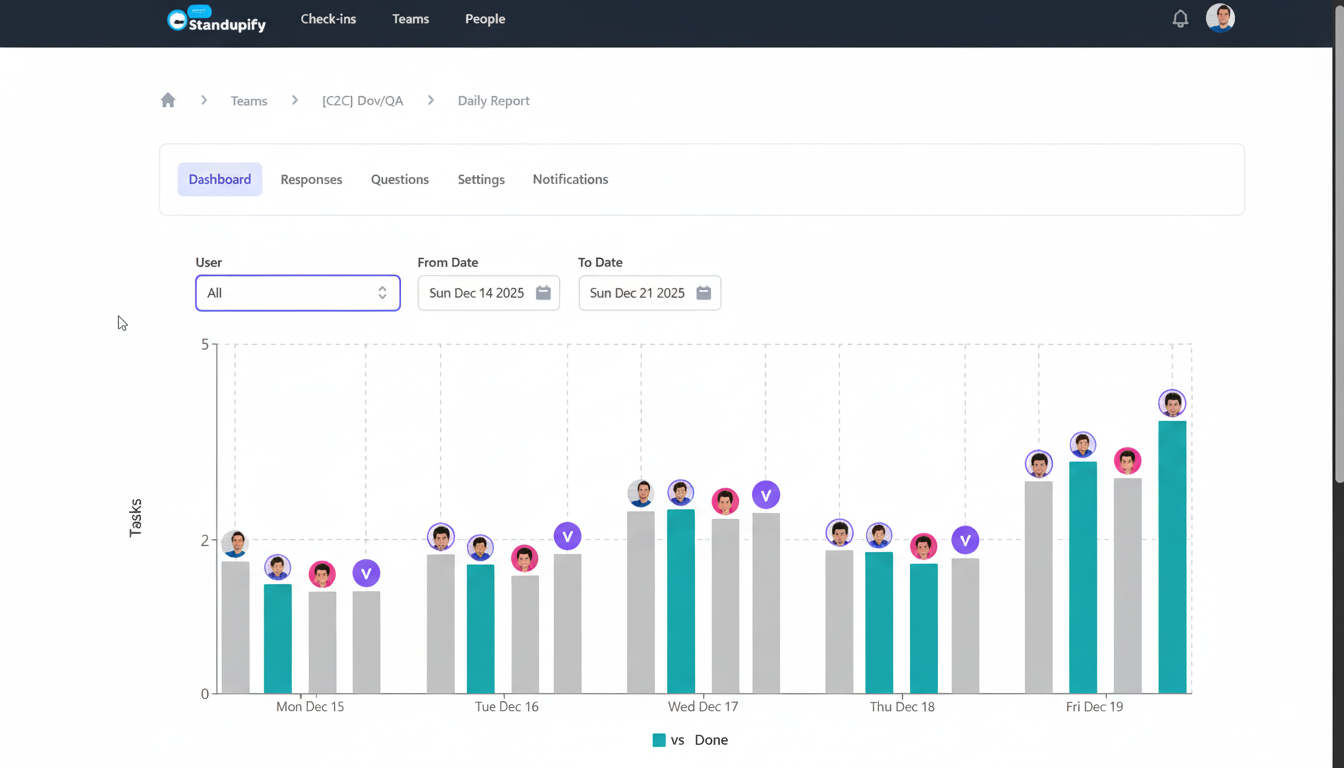
- Centralized Dashboard: Beyond Google Chat, all standup responses and team progress are accessible via the Standupify web dashboard, offering a holistic view of your team's activities.
Conclusion
Asynchronous standups are a powerful tool for modern remote and global teams looking to optimize communication, boost productivity, and foster a more inclusive work culture. By embracing this approach and leveraging tools like Standupify's Google Chat and Jira integration, your team can overcome the challenges of distributed work and unlock new levels of efficiency and focus. Ready to transform your team's daily sync? Get started with Standupify today!
Frequently asked questions
What is an asynchronous standup?
An asynchronous standup is a daily team check-in where team members provide updates on their work (what they did yesterday, what they'll do today, any blockers) at their convenience, rather than in a real-time meeting. Responses are typically submitted via a tool like Standupify and then compiled for the team to review.
How do asynchronous standups benefit remote and global teams?
Asynchronous standups are particularly beneficial for remote and global teams as they eliminate the need for synchronous meetings across multiple time zones. This reduces scheduling conflicts, allows team members to focus on deep work, and ensures everyone can contribute without disruption, leading to more inclusive communication and standardized reporting.
How does Standupify facilitate asynchronous standups?
Standupify streamlines asynchronous standups by allowing team members to submit their daily updates directly within Google Chat. It then compiles these responses into a comprehensive daily report, which can be shared with the team, integrated with Jira, and viewed on a central dashboard, ensuring everyone stays informed without live meetings.
Can I integrate Jira with Standupify for asynchronous standups?
Yes, Standupify offers robust Jira integration. You can connect your Jira projects to automatically pull relevant task information into daily reports and even update Jira tickets based on standup responses, providing a seamless workflow for project tracking and team updates.
How often should my team conduct asynchronous standups?
While 'daily' is in the name, the frequency can be adjusted to fit your team's needs. Many teams find daily asynchronous standups effective for maintaining consistent communication and identifying blockers quickly. However, some teams might opt for bi-weekly or even weekly check-ins depending on their project cycles and communication requirements.