The Future of Agile Teams: How AI and Smart Automation Will Redefine Productivity in 2027
As a Senior Tech Writer at Standupify, I’ve had a front-row seat to the seismic shifts impacting how engineering teams, product managers, and scrum masters approach daily productivity. We’re standing in September 2026, and the conversation isn’t just about 'adopting AI' anymore; it's about fundamentally rethinking our operating models. The bottlenecks that plagued us just a few years ago are vanishing, only to reveal new challenges – and immense opportunities – driven by intelligent automation.
If you're still viewing AI as a peripheral tool, you're missing the forest for the trees. This isn't just an incremental improvement; it's a paradigm shift that demands a forward-looking strategy, especially for agile teams. We’re on the cusp of 2027, and the way we manage tasks, conduct standups, and foster team collaboration is undergoing a profound transformation. Ignoring this is no longer an option.
The Shifting Sands of Productivity: AI's Unstoppable Ascent
The evidence is compelling: AI isn't just augmenting human capabilities; it's redefining the very fabric of our workflows. LiminalArc's recent insights from August 2026 highlight this perfectly, noting that 'the bottleneck moved.' Teams are reporting that AI agents can draft overnight, and test scaffolding that once consumed a sprint can now appear in an afternoon. Imagine features that used to take a quarter shipping in days, all at a fraction of the old cost. This isn't theoretical; it's happening now. Metrics like deployment frequency are skyrocketing, painting a clear picture of AI's impact on delivery engines. The Bottleneck Moved. Your Operating Model Hasn’t.
This isn't about replacing humans; it's about elevating their focus to higher-value activities. We've seen a surge in interest this year in how teams can harness AI's power without drowning in hidden costs or data risks, a topic we recently explored in our blog: How to Harness AI's Productivity Power Without Drowning in Hidden Costs or Data Risks.
Beyond Automation: AI as a True Productivity Partner
The initial wave of AI adoption focused on basic automation. Now, we're seeing AI transition from a mere 'smart advisor' to a 'personal coach' for agile teams. AgileSparks elaborates on this evolution, showing how AI can provide contextual guidance, predict potential roadblocks, and even suggest optimal paths forward. This isn't just about simple task completion; it's about intelligent foresight and strategic assistance, enabling teams to be proactive rather than reactive. When Does AI Transition from Smart Advisor to Personal Coach for the Agile Team?
From Daily Grind to Daily Gold: AI's Impact on Standups and Task Management
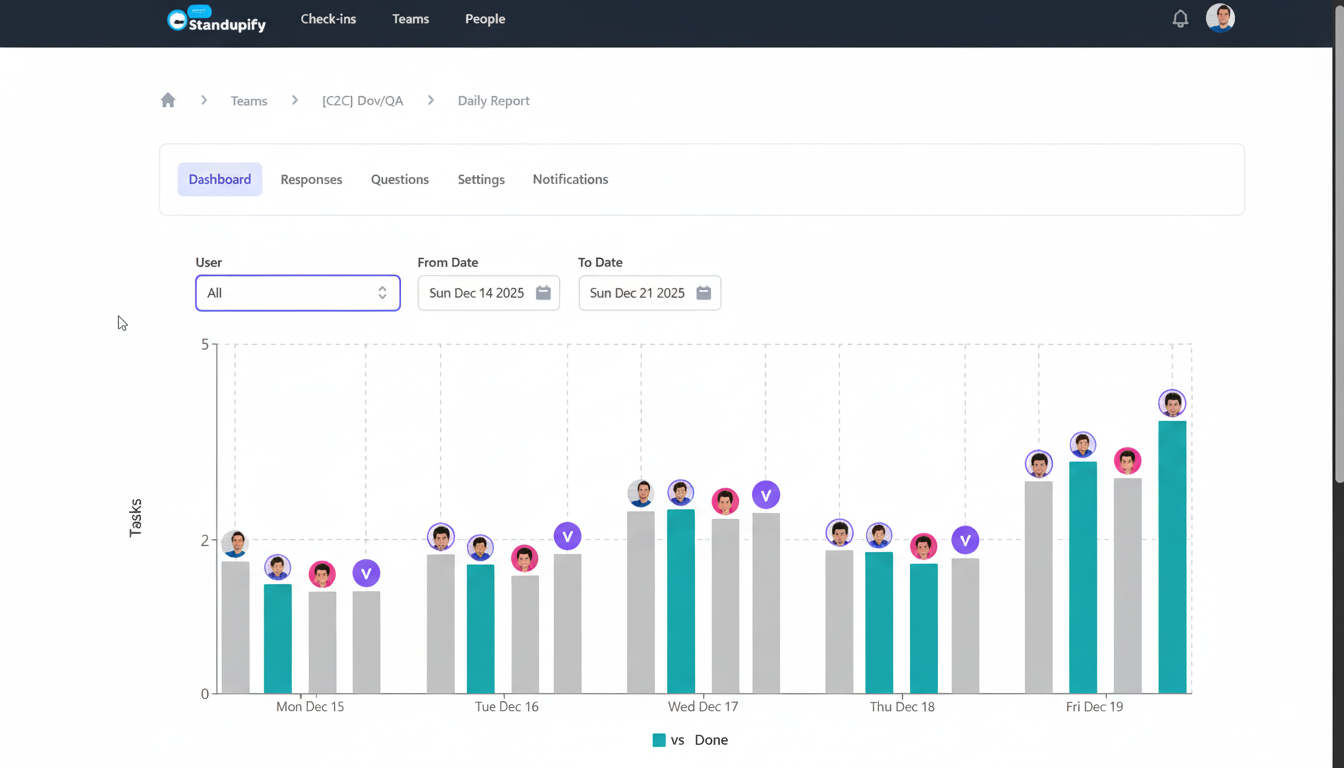
For agile teams, the daily standup is the heartbeat of progress. But let's be honest, how often do these meetings truly provide 'gold' rather than just a 'grind'? This is where AI-driven automation becomes indispensable. A sophisticated standup meeting tool, especially one integrated with AI, can transform these brief check-ins into powerful data-gathering and insight-generating sessions.
The Evolution of the Standup Meeting Tool
Gone are the days of manual updates and disjointed information. Modern standup solutions, like Standupify, are evolving to leverage AI for richer insights. Imagine a google chat standup bot that not only collects updates but also:
- Identifies Trends: Spotting recurring blockers or dependencies across team members.
- Predicts Delays: Analyzing task progression against estimates to flag potential slippages early.
- Summarizes Key Information: Providing concise summaries of daily progress, completed tasks, and upcoming priorities for managers who need a quick overview.
- Suggests Resource Allocation: Based on team capacity and project needs.
This level of intelligence moves beyond simple data entry, providing actionable intelligence that informs decision-making and keeps projects on track. The integration of AI into platforms like Jira and Confluence, as highlighted by AgileSparks, further streamlines this process, ensuring that standup data feeds directly into broader task management ecosystems. Unleashing the Power of AI in Atlassian Tools
Leveraging AI for Smarter Retrospectives and Continuous Improvement
The impact of AI extends beyond daily operations to the very core of agile improvement: retrospectives. AgileSparks also emphasizes how AI can make retrospectives smarter by analyzing historical data from standups, task trackers, and team communications to identify patterns, suggest discussion points, and even help prioritize action items. This transforms retrospectives from subjective discussions into data-driven improvement cycles. Make Your Agile Retrospectives Smarter with AI
Standupify's Role in the AI-Augmented Future
At Standupify, we understand that the future of team productivity lies in intelligent, seamless integration. Our Google Chat bot for daily standups is purpose-built for this new era. By automating the standup process within Google Chat and integrating deeply with task tracking systems, we provide a robust foundation upon which AI can build. Imagine our bot, already streamlining your daily check-ins, being further enhanced by AI to offer predictive insights into team velocity, flag potential cross-team dependencies, or even recommend adjustments to sprint goals based on real-time data.
The goal isn't just to make standups more efficient – though they certainly will be. It's about transforming the entire feedback loop, from daily updates to strategic planning. For agencies and developers, integrating smart automation and standup bots is already proving to be a game-changer for efficiency, as we've discussed in Unlocking Efficiency: How a Wix AI Blog Writer and Standup Bots Elevate Agencies & Developers. This synergy between human teams and intelligent tools is where true, sustainable productivity gains will be found in 2027 and beyond.
Navigating the Future: Practical Steps for Team Leads
For Engineering Managers, Team Leads, Scrum Masters, and Product Managers, the path forward is clear:
- Embrace AI Strategically: Don't just dabble. Identify core areas where AI can move bottlenecks, starting with repetitive tasks and data analysis.
- Invest in Integrated Tools: Standalone solutions are quickly becoming obsolete. Prioritize tools that connect seamlessly, allowing data to flow freely and inform AI-driven insights. A robust standup meeting tool integrated with your task tracker is non-negotiable.
- Foster a Culture of Continuous Learning: As AI evolves, so must your team's skills. Encourage experimentation and adaptation.
- Prioritize Data Quality: AI is only as good as the data it consumes. Ensure your task management and standup reporting are consistent and accurate.
Conclusion
The future of agile teams in 2027 is one where AI isn't just a helper but a core partner in driving productivity. It’s a future where a google chat standup bot does more than just ask three questions; it synthesizes, predicts, and empowers. The teams that embrace this intelligent evolution will be the ones that out-innovate, out-deliver, and ultimately, outperform their competitors. The time to adapt isn't next year; it's now. Are you ready to redefine your team's productivity?