3 Pillars of Unstoppable Team Productivity in 2026: Focus, Clarity, and Automated Flow
As we navigate the tail end of 2026, the landscape of team productivity feels less like a smooth highway and more like a perpetually congested urban sprawl. Engineering Managers, Team Leads, Scrum Masters, and Product Managers are all too familiar with the paradox: we have more tools, more data, and more communication channels than ever before, yet genuine, impactful productivity often remains elusive. The incessant pings, the unending context-switching, and the sheer volume of information can leave even the most dedicated teams feeling busy, but not truly productive.
It’s a sentiment echoed across industries. Our recent observations, backed by insights from leading productivity experts, confirm that the traditional approaches to time management and task prioritization are simply not enough in today's dynamic work environment. The problem isn't a lack of effort; it's a fundamental disconnect in how we approach focus, clarity, and the integration of smart automation. To truly unlock unstoppable team productivity in 2026 and beyond, we must build upon three critical pillars that address these modern challenges head-on.
Pillar 1: Cultivating Deep Focus in a Distracted World
Let’s be honest: work in October 2026 often feels more distracting than ever. If your team is struggling with constant interruptions, overflowing inboxes, and days that feel busy without yielding significant progress, you’re not alone. Our own research and discussions with industry leaders highlight a pervasive issue: the very design of modern work often invites interruption, making sustained focus a rare commodity.
The solution isn't to simply work harder, but smarter, by creating deliberate moments of “protected focus.” This isn't about blocking out entire days for deep work — though that's valuable when possible — but rather about carving out small, intentional periods where attention is shielded from the constant barrage of notifications. Think Productive's recent “Focus in a Distracted World” program emphasized practical tips from attendees: temporarily closing email, silencing notifications, and actively blocking focus time in calendars. As Jessica Scott insightfully noted, “attention management matters far more now than traditional ‘time management’ approaches.” This shift is critical for high-performing teams. You can dive deeper into these practical strategies by reading about 3 practical ways to stay focused at work in a distracted world.
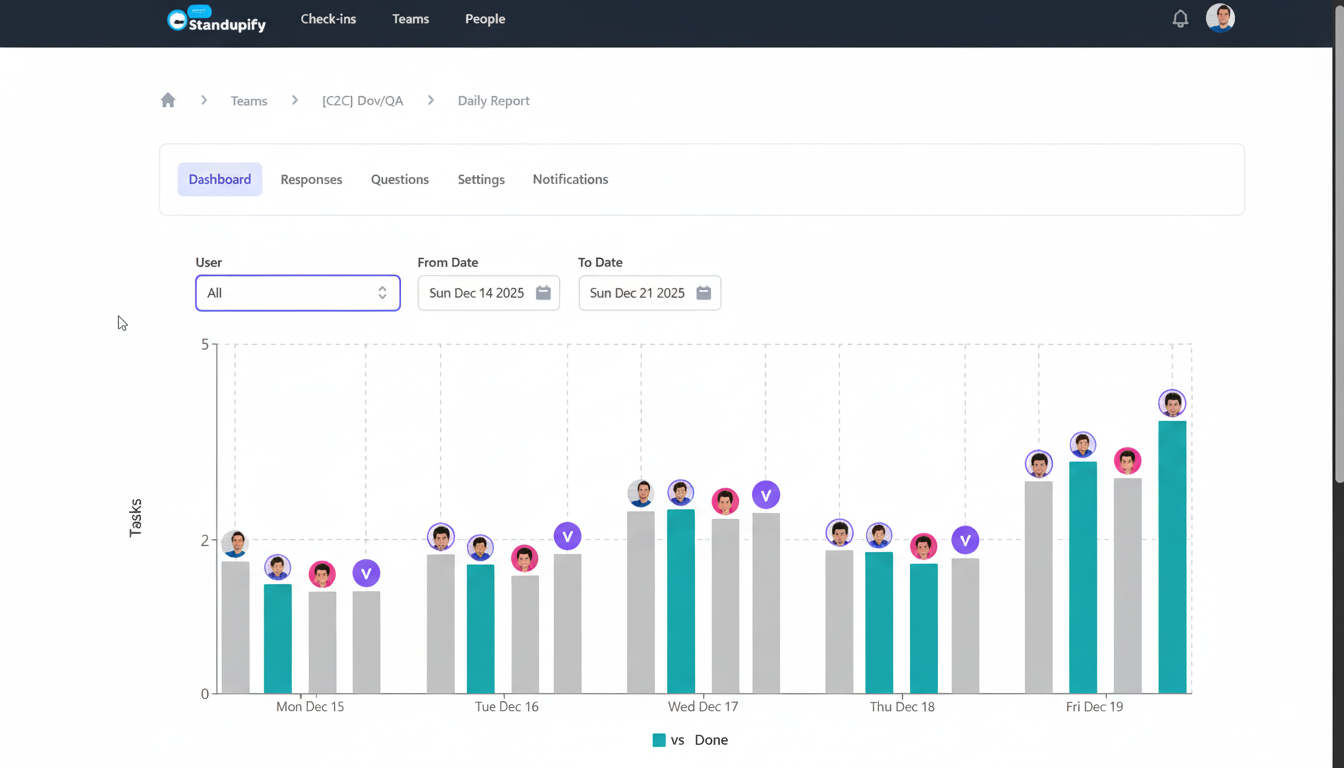
Another significant drain on focus is mental overload. Many professionals describe the stress of trying to juggle countless tasks, follow-ups, and ideas in their heads. This “thoughtload” fragments attention and makes it nearly impossible to concentrate on high-value work. A core benefit of a robust standup meeting automation tool like Standupify is its ability to centralize updates and task statuses. By providing a single source of truth for “what I did, what I’m doing, and what’s blocking me,” team members no longer need to carry that mental burden. This frees up cognitive capacity, allowing for deeper engagement with complex problems rather than constant mental inventory management.
Pillar 2: Achieving Crystal-Clear Clarity and Direction
Prioritization is often touted as the panacea for overwhelm, but experience tells us it’s often just a band-aid. “Why prioritisation alone doesn’t fix overwhelm at work,” as highlighted by Think Productive, underscores a crucial point: when pressure builds, people cope in different ways. Some need to talk things through, others need to take action, some require structure, and still others need to reconnect with the meaning of their work. The problem is that many workplaces default to “structure” (lists, systems) as the universal solution, which often falls short if it doesn't align with how individuals process their workload. This is especially true for teams who need to understand not just what to do, but why and how it impacts the bigger picture.
True clarity goes beyond a simple to-do list. It involves understanding where you are, where you want to go, and the precise action steps required to get there. Cathy Sexton of The Productivity Experts emphasizes these three “keys” — Clarity, Focus, and Action Steps — as fundamental to successful business planning. A thorough review of past performance and a clear vision for the future are essential for any team. You can learn more about these foundational concepts in her article, Are These 3 Key Things Part of Your Business Plan?
This is where a dedicated Google Chat standup bot becomes invaluable. Standupify isn't just about reporting; it's about fostering an environment of transparent communication that naturally leads to clarity. By integrating with task trackers, it ensures that every team member’s progress, challenges, and next steps are visible and easily digestible. This eliminates ambiguity, reduces the mental load of guessing what others are working on, and provides the necessary context for managers to offer the right kind of support — whether it's a conversation to clarify, an immediate action to unblock, or a structural adjustment to a workflow. The result is a team that moves forward with purpose, reducing the “busy without productive” syndrome.
Pillar 3: Embracing Automated Flow and Smart Tool Adoption
It’s 2026, and the promise of AI and automation to revolutionize our workflows is everywhere. Yet, adoption often lags behind expectation. Take Microsoft Copilot, for example. Despite being included in many Microsoft 365 licenses, Recon Analytics research covering over 150,000 US workers indicates that fewer than 4 in 10 employees with Copilot access actively use it. This isn’t resistance; it’s a gap in awareness and effective integration. The lesson here is clear: having powerful tools isn't enough; teams must actively embrace and integrate them into their daily flow to truly reap the benefits.
This principle applies directly to team standups. Manual, synchronous standups can be significant time sinks, especially for distributed or asynchronous teams. They interrupt flow, often devolve into status updates that could be shared more efficiently, and can lead to “meeting fatigue.” The solution lies in smart automation.
Standupify, as a premier standup meeting automation tool, transforms this process. It enables teams to conduct daily standups asynchronously within Google Chat, capturing critical updates without requiring everyone to stop what they're doing. This not only streamlines the standup itself but also integrates seamlessly with task tracking systems, providing a comprehensive, real-time view of team progress and blockers. This kind of automation is not about replacing human interaction but enhancing it, freeing up valuable synchronous time for deeper discussions and problem-solving.
For engineering managers and team leads, automating standups means more consistent updates, better visibility into potential roadblocks, and a significant reduction in administrative overhead. It empowers teams to work more efficiently within Google Work Patterns, aligning with the modern demand for flexible yet productive workflows. We've seen how integrating such tools can be a game-changer, as detailed in our post on 4 Essential Strategies for Streamlining Automated Standup Meetings in 2026. By leveraging a dedicated Google Chat standup bot, teams can move from reactive status updates to proactive progress tracking, fostering an environment where innovation can truly thrive.
Ready to Build Your Unstoppable Team?
In 2026, achieving unstoppable team productivity isn't about working longer or simply trying to “prioritize more.” It's about strategically cultivating environments that foster deep focus, ensure crystal-clear clarity, and embrace smart automation to create an uninterrupted flow of work. By leaning into these three pillars, Engineering Managers, Team Leads, Scrum Masters, and Product Managers can transform their teams from merely busy to profoundly productive.
Standupify is built precisely for this purpose — to be the catalyst that helps your team achieve this new level of efficiency and engagement within Google Chat. Ready to see the difference a truly integrated and automated standup solution can make? Discover how Standupify can help your team reclaim its focus, gain unparalleled clarity, and embrace an automated workflow that drives real results.