The 24-Hour Delay: How to Surface and Solve Agile Blockers Faster
The Problem: The Cost of Waiting for Tomorrow's Standup
As a Scrum Master, you know the scenario all too well: a team member hits a critical blocker mid-day, but waits until the next morning's daily standup to announce it. This '24-hour delay' might seem minor, but its cumulative impact is significant. Unreported or delayed blockers cost teams an average of 1 to 1.5 days per sprint, directly impacting sprint velocity and increasing the risk of missed commitments. This waiting game stifles agility and creates unnecessary bottlenecks in your development cycle.
Establishing an Async Blocker Reporting Culture
The solution lies in fostering an asynchronous (async) blocker reporting culture. Instead of relying solely on the daily standup, empower your team to surface impediments the moment they occur. This shift in mindset is crucial for maintaining flow and accelerating problem-solving. Research shows that implementing async reporting can reduce blocker resolution time by up to 50%.
Here's how to cultivate this culture:
- Educate Your Team: Explain the direct impact of delayed blockers on sprint goals and team morale. Highlight the benefits of immediate reporting.
- Provide the Right Tools: Ensure team members have an easy, low-friction way to report blockers instantly. This is where Standupify shines.
- Lead by Example: As a Scrum Master, actively monitor for blockers and respond promptly to those reported asynchronously, demonstrating the value of the new process.
Using Standupify's Manual Text Input for Instant Blockers
Standupify is designed to be more than just a daily standup bot; it's a real-time communication hub. While it automates your regular check-ins, it also provides a flexible mechanism for ad-hoc reporting, perfect for blockers.
How Team Members Report Blockers:
- Access Standupify: Team members can interact with Standupify directly in Google Chat at any time.
- Utilize Manual Input: Even outside of a scheduled daily check-in, team members can use Standupify's manual text input feature to type out their blocker. This can be a simple message like "@Standupify Blocker: Can't access staging environment, need DevOps help."
- Be Specific: Encourage team members to include key details: what the blocker is, which task/story it affects, and who might be able to help.
You can also customize your daily standup questions to include a specific prompt for blockers, ensuring it's a regular part of the reporting process, even if it's not the only way to report them.
Routing Blockers Instantly for Rapid Resolution
Once a blocker is reported via Standupify, the system ensures it doesn't get lost. Here's how Standupify helps route and resolve blockers:
- Real-time Notifications: Standupify can be configured to send immediate notifications to relevant stakeholders (e.g., the Scrum Master, specific team leads, or even the entire team) when a blocker is reported. Learn more about configuring daily report notifications.
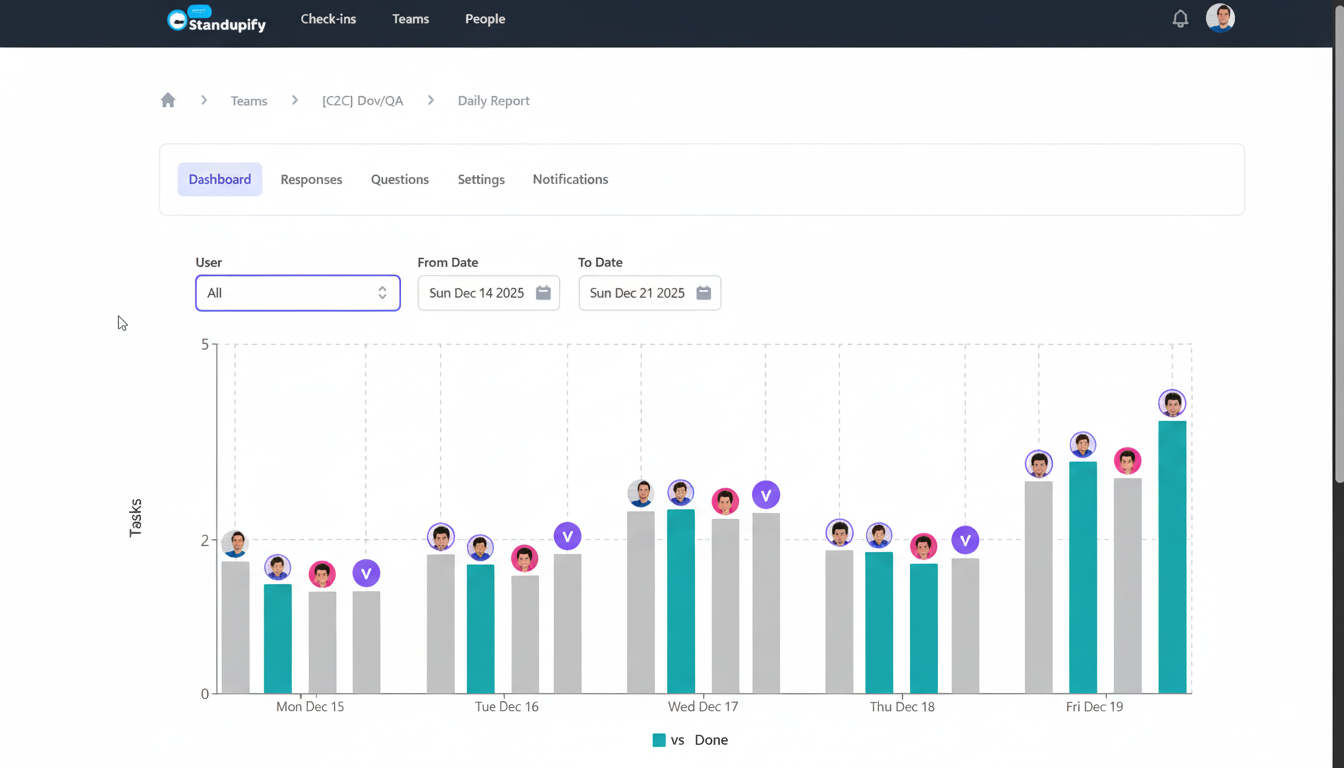
- Centralized Visibility: All reported blockers, whether part of a daily standup or an ad-hoc report, are visible in your Daily Report Dashboard. As a Scrum Master, this gives you a centralized view to monitor and manage all impediments.
- Jira Integration: Leverage Standupify's powerful Jira integration. Blockers reported through Standupify can be automatically converted into Jira issues, linked to existing tasks, or flagged for immediate attention within your project management tool. This ensures that blockers are not just reported, but actively tracked and assigned for resolution.
By integrating Standupify into your agile workflow, you transform blocker reporting from a passive, scheduled event into an active, real-time process. This empowers your team to maintain momentum and ensures that impediments are addressed with the speed and efficiency that modern agile development demands.
Frequently asked questions
What is the '24-hour delay' in agile blocker resolution?
The '24-hour delay' refers to the common problem where team members wait until the next morning's daily standup to report a blocker, significantly delaying its resolution and impacting sprint progress.
How does async blocker reporting improve development cycles?
Async blocker reporting allows team members to report issues immediately as they arise, rather than waiting for a scheduled meeting. This reduces the time blockers remain unaddressed, speeding up the development cycle and improving overall team velocity.
How can Standupify help report blockers instantly?
Standupify provides a manual text input feature within its daily check-in process. Team members can use this field to report blockers as soon as they encounter them, ensuring the information is captured and routed without delay.
Can Standupify integrate with Jira for blocker management?
Yes, Standupify's robust Jira integration allows reported blockers to be automatically routed into your Jira workflow. This can involve creating new issues, linking to existing ones, or notifying relevant stakeholders directly within Jira, streamlining the resolution process.
What are the benefits for Scrum Masters using this approach?
Scrum Masters gain immediate visibility into blockers, enabling them to intervene and facilitate resolution much faster. This proactive approach minimizes downtime, keeps sprints on track, and significantly reduces the average 1 to 1.5 days lost per sprint due to delayed blocker reporting.