Stop Putting Your Team on the Spot: A Guide to Better Agile Retrospectives
Why Synchronous Retros Often Miss the Mark
Agile retrospectives are crucial for continuous improvement, yet many teams struggle to make them truly effective. Traditional synchronous retros, while well-intentioned, often fall prey to several common pitfalls:
- Introvert Anxiety: Up to 50% of software engineers lean introverted. In a live setting, these valuable team members may feel pressured, struggle to articulate thoughts on the spot, or be overshadowed by more vocal colleagues. Their insights, often deeply considered, remain unshared.
- Recency Bias: What happened yesterday or this morning tends to dominate the conversation, overshadowing events from earlier in the sprint. This leads to a skewed perspective and missed opportunities for improvement.
- Groupthink: Early contributions can steer the discussion, making it harder for dissenting or alternative viewpoints to emerge.
- Time Constraints: Rushing through topics to fit a strict timebox can prevent deep dives into critical issues.
These challenges can lead to superficial discussions, low engagement, and ultimately, a failure to address the root causes of team impediments.
The Power of Asynchronous Preparation
Imagine a retrospective where every team member has had ample time to reflect, gather their thoughts, and contribute their honest feedback without interruption. This is the promise of the asynchronous preparation method.
By shifting the initial feedback collection to an asynchronous format, you:
- Empower Introverts: Provide a safe space for reflection and written contribution, ensuring all voices are heard.
- Combat Recency Bias: Encourage team members to review the entire sprint, leading to more comprehensive feedback.
- Increase Participation & Idea Generation: Studies show that gathering feedback asynchronously can increase participation rates and idea generation by over 30%.
- Foster Psychological Safety: Anonymity (if desired) or simply the lack of immediate judgment can encourage more candid feedback.
Step-by-Step: Your Asynchronous Retro Workflow
Here’s how to implement a more effective, introvert-friendly agile retrospective:
- Define Your Retro Focus: Before the sprint ends, decide on the key areas you want to explore (e.g., team collaboration, technical debt, sprint planning, specific project challenges).
- Set Up an Asynchronous Check-in: Use a tool like Standupify to create a dedicated retro check-in. Configure questions that align with your focus (e.g., "What went well this sprint?", "What could we improve?", "What puzzles or challenges did you face?").
- Schedule the Check-in: Distribute the check-in questions to your team a few days before the planned synchronous retro meeting. Give them a clear deadline for submission.
- Encourage Thoughtful Reflection: Remind team members to review their sprint activities, notes, and feelings over the entire period, not just the last few days.
- Collect & Synthesize Feedback: Once all responses are in, the Agile Coach or Scrum Master reviews and synthesizes the feedback. Look for common themes, recurring issues, and standout ideas.
- Prepare for the Synchronous Session: Based on the synthesized data, prepare a concise agenda for the live retro. Focus on discussing the most critical themes, brainstorming solutions, and committing to actionable improvements.
- Facilitate the Synchronous Discussion: During the live meeting, instead of starting from scratch, you'll already have a wealth of pre-collected data. Your role shifts from eliciting ideas to facilitating deeper discussion, prioritization, and action planning based on the asynchronous input.
- Follow Up: Ensure agreed-upon actions are documented and assigned, and follow up on their progress in subsequent sprints.
Leveraging Standupify for Seamless Retro Check-ins
Standupify, your Google Chat Standup Bot, is perfectly suited to facilitate the asynchronous preparation phase of your retrospectives. Here’s how you can integrate it:
- Install the Bot: First, ensure you have the Standupify Google Chat Bot installed in your workspace. If not, follow our guide on How to Install the Standupify Google Chat Bot.
- Create a Custom Check-in: Navigate to your Standupify dashboard and create a new check-in specifically for your retro. You can name it something like "Sprint X Retrospective Prep."
- Customize Retro Questions: Use the How to Customize Daily Standup Questions feature to craft your retro-specific questions. For example:
- "What went exceptionally well this sprint that we should continue?"
- "What challenges did you encounter, and how could they have been mitigated?"
- "What is one thing we should start doing as a team?"
- "What is one thing we should stop doing as a team?"
- Configure Schedule and Participants: Set the check-in to run once at the end of your sprint, giving your team a few days to respond. Assign the relevant team members to this retro check-in. Learn more about managing these settings in our Guide: Managing Your Standupify Check-in Settings.
- Automated Reminders: Standupify will automatically send the retro questions to your team members via Google Chat at the scheduled time, along with reminders, ensuring high participation.
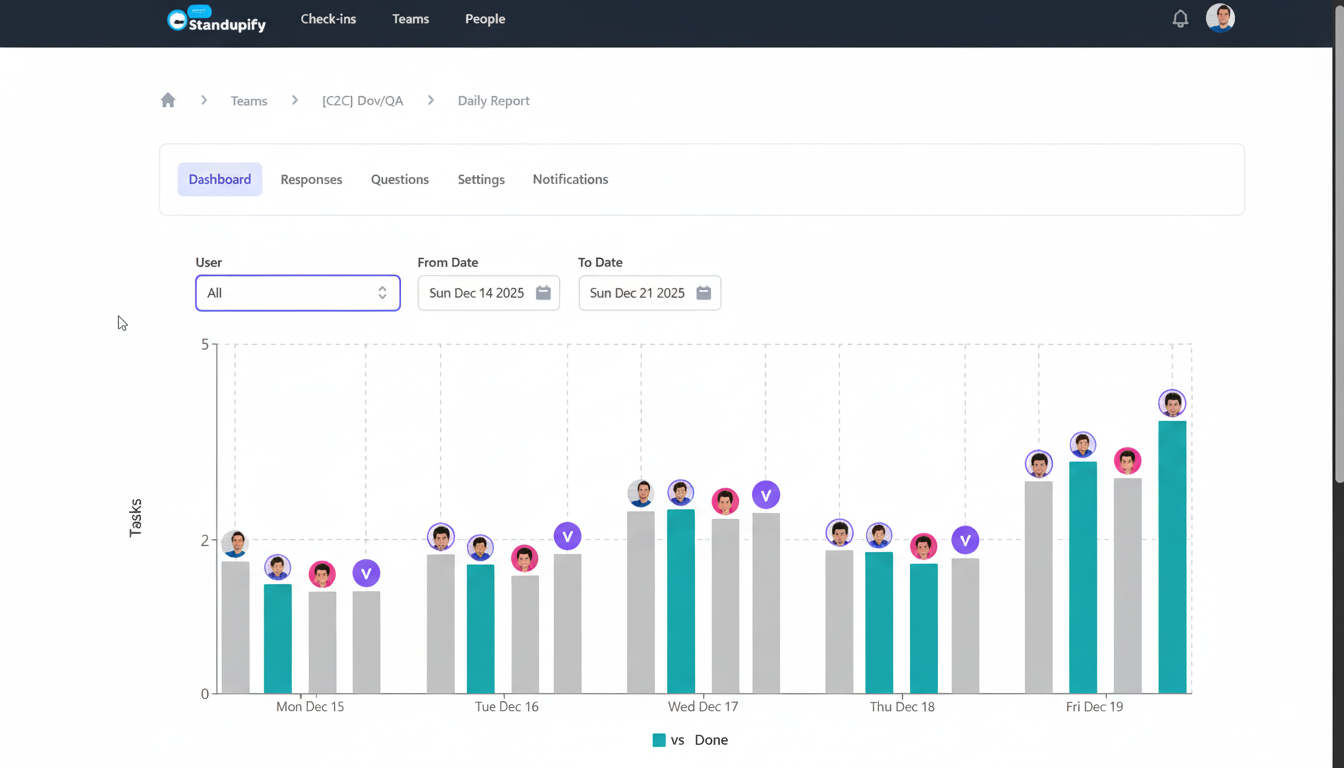
- Review Responses: Once responses are collected, you can view them centrally in Standupify, making it easy to identify themes and prepare for your synchronous discussion. While designed for daily reports, the principles of Automated Daily Standup Summaries can inspire how you might synthesize and share key retro insights.
Conclusion: Foster a Culture of Continuous Improvement
By adopting an asynchronous preparation method for your agile retrospectives, you move beyond superficial discussions to uncover deeper insights and foster a truly inclusive environment. Leveraging tools like Standupify in Google Chat empowers every team member to contribute their best, leading to more meaningful actions and a stronger culture of continuous improvement. Stop putting your team on the spot and start building retrospectives that truly drive progress.
Frequently asked questions
What kind of questions can I ask in an asynchronous retro using Standupify?
You can customize your Standupify check-in questions to suit any retro format. Common questions include: 'What went well?', 'What could be improved?', 'What should we stop doing?', 'What should we start doing?', or specific questions related to recent challenges or successes.
How does Standupify help introverted team members in retrospectives?
Standupify facilitates asynchronous feedback gathering, allowing introverted team members to reflect, formulate their thoughts, and contribute in writing without the pressure of speaking on the spot in a live meeting. This ensures their valuable insights are heard and considered.
Can I use Standupify for other types of team feedback beyond retrospectives?
Absolutely! Standupify is highly customizable. While primarily designed for daily standups, its flexible check-in system can be adapted for pulse surveys, project feedback, team health checks, or any recurring asynchronous feedback collection you need.
How do I set up a retro check-in in Standupify?
You can set up a retro check-in by creating a new check-in or modifying an existing one in Standupify's settings. Customize the questions to fit your retro theme, set the schedule (e.g., end of sprint), and assign it to your team. Participants will then receive the questions via Google Chat.
Is the asynchronous retro method only for remote teams?
While highly beneficial for remote and hybrid teams, the asynchronous retro method is equally effective for co-located teams. It provides a dedicated space for individual reflection and ensures all voices are heard, regardless of physical location, leading to richer discussions when the team does meet.