Flow Efficiency vs. Busyness: 5 Ways to Transform Standups and Boost Team Throughput in 2026
As Engineering Managers, Team Leads, Scrum Masters, and Product Managers, we often equate a bustling team with a productive one. Packed calendars, endless meetings, and dashboards glowing with individual activity can certainly give the illusion of progress. But let's be blunt: being busy is not the same as being effective. In fact, focusing purely on keeping resources busy might be the very thing throttling your team's true throughput and costing your organization real value in late 2026.
The distinction between resource efficiency (keeping people busy) and flow efficiency (optimizing the smooth movement of work) is critical. For too long, the industry has prioritized the former, leading to blocked work, frustrated teams, and delayed delivery. It's time for a paradigm shift, especially as new technologies accelerate the pace of development.
The Illusion of Busyness: Why Resource Efficiency Fails
Most organizations operate under the deeply ingrained assumption that a fully utilized team is an efficient team. We measure individual tasks completed, hours logged, and personal utilization rates. These traditional metrics might look good on paper, but they rarely tell the full story of value delivery. As Ken Rubin eloquently states, "Most organizations measure activity: tasks completed, hours logged, or individual utilization. These numbers may look good, but they rarely point out where value" is actually being created or hindered. This focus on individual busyness often overlooks the systemic issues that prevent work from flowing seamlessly through the entire development pipeline. It's a fundamental flaw that holds back real progress. We need to measure what matters: how quickly and smoothly work moves from idea to impact. You can't improve what you don't measure, and if you're only measuring busyness, you're missing the point entirely.
**The 2026 Reality: AI, Velocity, and the Delivery Gap
The landscape of software development is evolving at breakneck speed. The widespread adoption of AI code generation tools has dramatically increased the velocity at which developers can produce code. This sounds like a win for productivity, right? Not necessarily. While individual output surges, the downstream systems — QA, CI/CD pipelines, and review processes — often struggle to keep up, creating a significant delivery gap.
Recent data underscores this challenge. Across CircleCI projects, average throughput impressively grew 59% year over year. However, for the median team, this wasn't all positive: feature-branch throughput increased by 15%, but main-branch throughput actually declined by 7%. Even more concerning, main-branch success rates plummeted to 70.8%, the lowest in over five years and well below CircleCI’s recommended 90% benchmark. The DORA 2024 research further corroborates this, associating increased AI adoption with an estimated 1.5% decrease in delivery throughput and a 7.2% reduction in delivery stability. These numbers are a stark warning: simply generating more code doesn't mean you're delivering more value faster. In fact, it can introduce more problems if the pipeline isn't optimized for flow. For more on this, consider reading our post, The Great AI Agent Rollout: Are We Building Smarter Teams, or Just More Problems?
The core issue isn't a lack of effort; it's a lack of focus on flow. When producers (developers with AI assistance) send work faster than consumers (CI/CD, QA) can process it, the system gets congested. This leads to growing pull-request queues, less thorough reviews, flaky tests, and unresolved merge conflicts. We need a strategic approach to manage this increased volume and ensure smooth delivery.
5 Strategies to Shift from Busy to Flowing
1. Prioritize Flow Metrics Over Activity Metrics
To truly understand and improve your team's effectiveness, you must shift your focus from individual activity to systemic flow. Instead of tracking hours logged or tasks completed, measure:
- Cycle Time: The time it takes for a work item to go from 'in progress' to 'done'.
- Lead Time: The total time from when a request is made to when it's delivered.
- Throughput: The number of work items completed over a specific period.
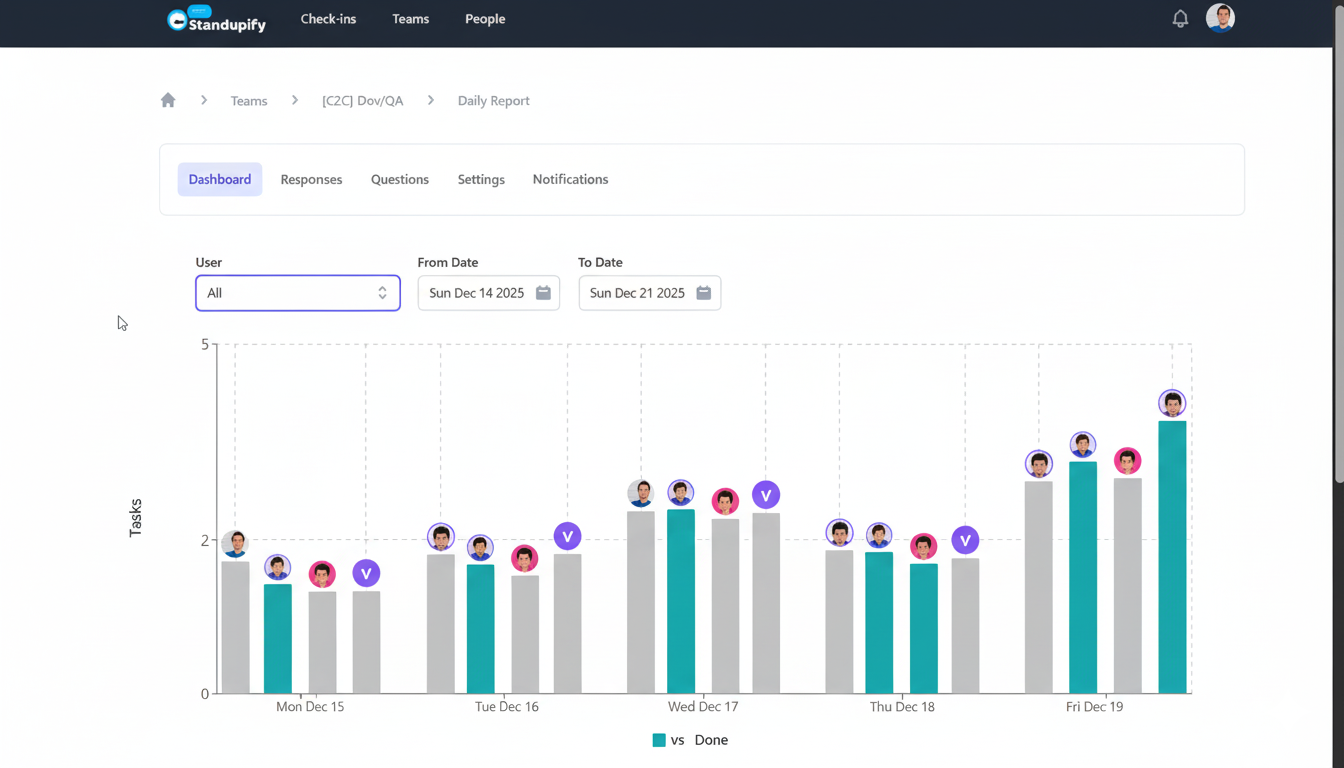
These metrics provide a clear, data-driven view of how efficiently work moves through your system. They highlight bottlenecks and areas where work is getting stuck, allowing you to make informed decisions. A robust Google Chat team bot like Standupify can be instrumental here, automating the collection of progress updates and integrating with your task tracker to provide real-time insights into these critical flow metrics.
2. Expose and Address Dependency Friction
One of the most insidious killers of flow efficiency is what Ken Rubin terms "dependency friction" — the systemic drag caused by work items relying on other work items, teams, or external factors. These dependencies create hidden delays, handoffs, and risks, often leading to blocked work and idle resources. Agile organizations strive for flow, "the smooth, steady movement of work through a process to ensure that good economic value is delivered." Dependencies directly contradict this goal.
**Your daily standups are the perfect forum to surface these blockers. However, traditional standups often gloss over them. By optimizing your standup format to explicitly ask about dependencies and blockers, you can bring this hidden friction to light. An automated standup bot can prompt team members to identify dependencies, making it easier for managers to track, prioritize, and resolve them, significantly enhancing standup team effectiveness.
3. Implement "Back Pressure" in Your Workflow
The concept of "back pressure" comes from distributed and data-streaming systems: when consumers can't process work as fast as producers generate it, the consumer signals upstream, and producers slow down to prevent overflow. This prevents the system from grinding to a halt under an unmanageable load. Your software delivery pipeline needs the same mechanism.
This means consciously limiting Work In Progress (WIP). Instead of starting new tasks, teams should focus relentlessly on finishing existing ones. When the CI/CD pipeline is congested, instead of pushing more code, the team should direct effort towards clearing the bottleneck — fixing flaky tests, improving review processes, or resolving merge conflicts. This strategic pause ensures that the system remains stable and that work flows, rather than piling up in unmanaged queues. Standupify, as a Google Chat team bot, can help visualize WIP and identify where back pressure needs to be applied, ensuring teams are working on the right things at the right time.
4. Optimize Standups for Flow, Not Just Updates
The daily standup, when done right, is a powerful tool for flow. When done wrong, it's just another meeting eating into valuable time. The traditional "what I did, what I'm doing, what's blocking me" format can become a monotonous status report. To truly boost standup team effectiveness, shift the focus:
- Focus on Blockers First: Prioritize discussing anything impeding progress.
- Focus on Flow: How is the work moving through the system? Are we on track to meet our sprint goal?
- Discussion, Not Reporting: Use the time for quick problem-solving and collaboration, not just individual updates.
A Google Chat bot like Standupify can automate the collection of individual updates asynchronously, allowing the live standup to be a focused, action-oriented session dedicated to clearing roadblocks and ensuring smooth flow. This transforms the standup from a reporting chore into a powerful coordination hub.
5. Leverage Automation for Real-time Flow Insights
In 2026, relying on manual data collection or retrospective analysis for flow insights is simply too slow. To maintain velocity and stability in a fast-paced environment, teams need real-time visibility into their workflow. Automation is no longer a luxury; it's a necessity.
**This is where tools like Standupify shine. By integrating seamlessly with your task trackers and automating daily standup collection directly within Google Chat, a Google Chat team bot can:
- Collect structured updates on progress and blockers.
- Aggregate data to provide immediate visibility into flow metrics.
- Identify potential bottlenecks and dependencies as they emerge.
- Reduce the time spent in meetings, freeing up valuable development time.
Remember, as the Innolution blog series highlights, "You can’t improve what you can’t see." By automating the data collection and visualization of your team's flow, you gain the clarity needed to make rapid, informed decisions that genuinely impact throughput.
Conclusion: From Busy to Flowing
The era of equating busyness with productivity is over. In 2026, with the increasing demands of rapid software delivery and the complexities introduced by AI-assisted development, a strategic shift towards flow efficiency is paramount. For Engineering Managers, Team Leads, Scrum Masters, and Product Managers, this means challenging old assumptions, embracing new metrics, and leveraging intelligent automation.
By adopting these five strategies — prioritizing flow metrics, addressing dependency friction, implementing back pressure, optimizing standups for flow, and leveraging tools like Standupify — your team can move beyond the illusion of busyness. You'll not only boost your team's throughput but also cultivate a more effective, less frustrated, and ultimately more successful development culture. Don't just be busy; be brilliantly effective.