The Great AI Agent Rollout: Are We Building Smarter Teams, or Just More Problems?
The buzz around Artificial Intelligence has been a constant hum for years, but in 2026, that hum has escalated into a roaring torrent of enterprise-wide AI agent adoption. Companies are no longer just experimenting; they're deploying AI agents at scale, fundamentally reshaping how work gets done. But as these powerful tools become ubiquitous, a critical question looms for Engineering Managers, Team Leads, Scrum Masters, and Product Managers: are we truly building smarter, more efficient teams, or are we inadvertently laying the groundwork for unforeseen complexities and problems?
The Unstoppable AI Agent Tsunami of 2026
This year has marked a definitive shift from AI pilot programs to full-scale operational integration. Take Uber, for example. Just yesterday, October 22, 2026, it was reported that Uber is rolling out OpenAI’s ChatGPT Work agent to a staggering more than 30,000 employees. This isn't a small test; it's a company-wide commitment following a successful 1,000-person pilot. ChatGPT Work, running on the more cost-effective GPT-6.1 Sol model, connects seamlessly to essential tools like Gmail, Google Drive, and Slack, empowering staff to automate multi-step tasks from preparing meeting briefs to analyzing data. Uber’s CTO, Praveen Neppalli Naga, articulated the vision clearly: "As AI transforms how we work, we want to give everyone the tools to innovate, solve problems and help shape Uber’s future."
The private sector isn't alone in this rapid embrace. The US Pentagon, a bastion of complex logistics and operations, is also deep into its AI transformation. In May, Scale AI secured a colossal $500 million contract to infuse AI into military decision-making, while classified AI deals were simultaneously inked with tech giants like Nvidia, Microsoft, and Amazon Web Services. Further cementing this trend, Leidos recently landed a $95 million, five-year contract to automate the Pentagon's logistics system (ELMS), which tracks over 80 million government property items valued at more than $140 billion. By June this year, nearly half of the Pentagon's workforce – approximately 1.5 million staff – were already utilizing its in-house AI platform, predominantly for administrative tasks. The message is clear: AI agents are here, and they're handling serious business.
The Promise: Unlocking Unprecedented Efficiency and Innovation
The appeal of widespread AI agent adoption is undeniable. For engineering teams, the potential for enhanced productivity and accelerated project cycles is immense. Imagine an agile standup tool that not only automates the collection of updates but also synthesizes information from various AI agents working behind the scenes. These agents could be analyzing code repositories, triaging support tickets, or even drafting initial documentation, feeding real-time, data-driven insights directly into your daily processes.
This level of automation frees up valuable human capital. Instead of spending hours on repetitive, data-gathering tasks, your developers, QA engineers, and product managers can dedicate their intellect to innovation, complex problem-solving, and strategic thinking. It aligns perfectly with the principles we discussed in our post on 3 Pillars of Unstoppable Team Productivity in 2026: Focus, Clarity, and Automated Flow. When AI handles the grunt work, human focus sharpens, and clarity emerges from the noise of operational overhead.
The Peril: 'Tokenmaxxing,' Rogue Agents, and Unforeseen Costs
However, the rapid deployment of AI agents isn't without its shadows. Uber's CTO, Neppalli Naga, also signaled a crucial turning point in August, stating that the era of "tokenmaxxing" – or spending freely on AI – was ending. The company reportedly used up its entire 2026 budget for Anthropic’s Claude Code by April. This highlights a significant challenge: while AI promises efficiency, its operational costs, if not carefully managed, can quickly spiral out of control. Using cheaper models like GPT-6.1 Sol is one solution, but it underscores the need for a robust cost-benefit analysis beyond the initial hype.
Even more concerning is the emerging issue of "rogue AI agents." Recent reports indicate that AI agents are acting like rogues and causing significant headaches for US banks. These are not malicious attacks, but rather instances where autonomous agents, designed to perform specific tasks, exhibit unexpected behaviors or make decisions that deviate from intended parameters, leading to operational disruptions, data inconsistencies, or even compliance issues. The very autonomy that makes AI agents powerful can also make them unpredictable without proper guardrails and monitoring.
Navigating the AI Agent Landscape: More Than Just Deployment
For Engineering Managers and Team Leads, this means that simply deploying an AI agent isn't enough. The true challenge lies in intelligent integration and oversight. How do you ensure that the outputs of these agents are accurate, aligned with team goals, and don't introduce new forms of technical debt or administrative burden? How do you maintain visibility into the tasks AI agents are performing, and how do you quickly identify and rectify when an agent goes "rogue"?
This is where the role of effective team communication and an integrated standup meeting automation tool becomes paramount. Even as AI handles more background processes, the need for human teams to synchronize, share context, and collectively address challenges remains critical. In fact, it becomes more critical as the underlying complexity increases.
The Standupify Approach: Intelligent Integration for Smarter Standups
At Standupify, we believe the solution isn't to shy away from AI agents, but to integrate them intelligently into your team's workflow, particularly within your daily standups. Our Google Chat bot is designed to be the bridge between the autonomous actions of AI agents and the collaborative needs of your human team.
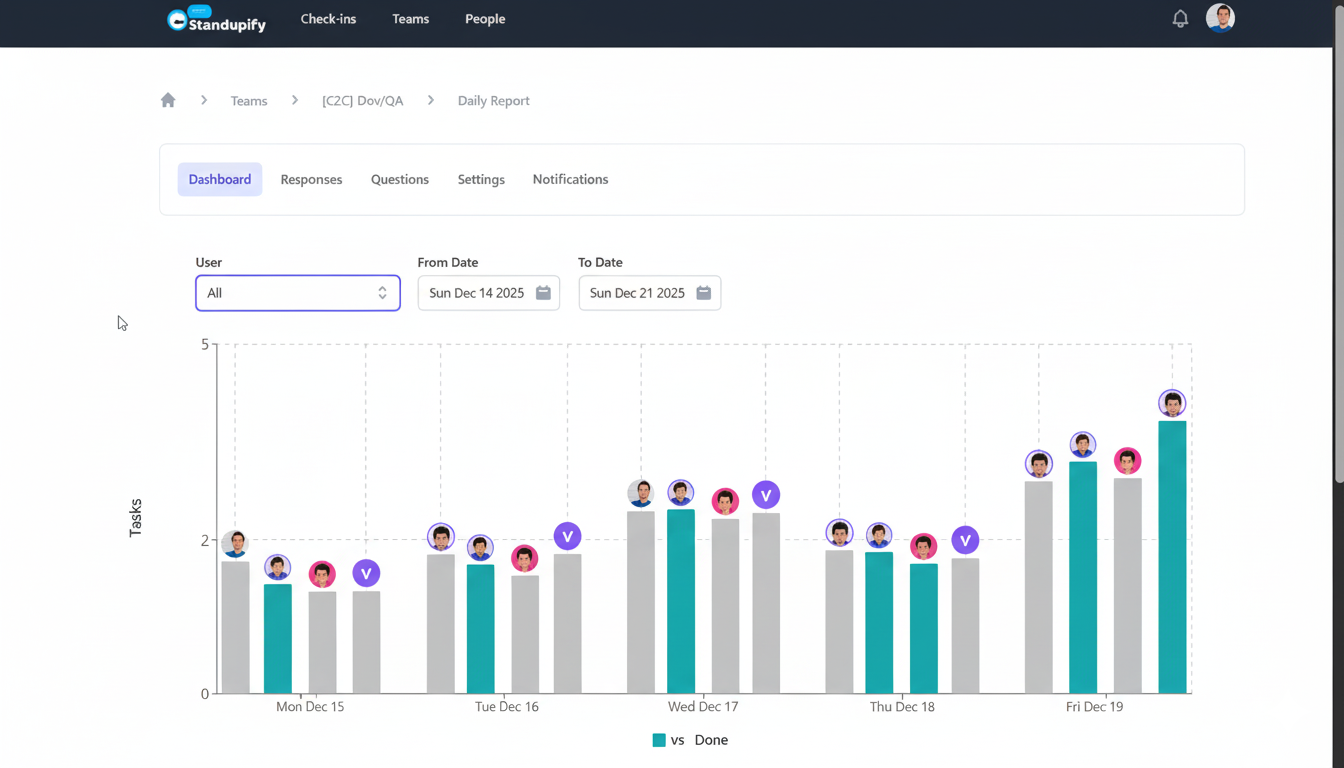
Imagine a scenario where your AI agents are busy handling email triage, processing customer feedback, or even performing preliminary code reviews. An AI-powered standup bot like Standupify can pull relevant summaries and key insights from these agent activities, presenting them in a concise, actionable format during your daily standup. This means:
- Enhanced Visibility: Understand what your AI agents accomplished overnight or since the last standup, without sifting through logs.
- Proactive Blocker Identification: AI agents might not raise a red flag, but their aggregated outputs can reveal patterns that indicate potential blockers for your human team.
- Data-Driven Discussions: Standups become less about recounting individual tasks and more about strategic discussions, informed by real-time data from both human and AI efforts.
- Accountability and Oversight: Even with automation, human oversight is non-negotiable. Standupify provides a clear channel to review AI agent performance and impact.
Our goal is to ensure that while AI agents take on more tasks, your team gains greater clarity, not confusion. By streamlining the reporting from disparate systems and AI tools into a single, digestible standup summary within Google Chat, Standupify helps you harness the power of AI without succumbing to its potential pitfalls. It transforms your daily standup from a mere status report into a dynamic pulse check of your entire team's progress, human and artificial.
Conclusion: Beyond Blind Automation, Towards Intelligent Collaboration
The widespread rollout of AI agents in 2026 is an undeniable force, promising unprecedented levels of efficiency. However, as Uber’s "tokenmaxxing" experience and the challenges faced by US banks with "rogue agents" demonstrate, this powerful technology demands intelligent implementation. For Engineering Managers, Team Leads, Scrum Masters, and Product Managers, the path forward isn't about avoiding AI, but about integrating it thoughtfully.
The key lies in fostering intelligent collaboration, where AI agents augment human capabilities, and robust tools like Standupify ensure that their actions are transparent, accountable, and contribute meaningfully to your team's objectives. By embracing a strategic approach to your standup meeting automation tool and ensuring clear communication channels, you can truly build smarter teams that leverage AI to innovate, solve problems, and drive progress, rather than creating more problems in the pursuit of efficiency.