5 Ways to Make Your Sprint Retrospectives Shorter and More Actionable
Why Retrospectives Often Miss the Mark
Sprint retrospectives are crucial for continuous improvement in Agile teams, yet they often become lengthy, unfocused sessions that leave participants feeling drained rather than energized. Common pitfalls include:
- Too much time on problem identification: Teams spend the majority of the meeting rehashing issues everyone already knows.
- Lack of focus: Discussions wander, and the agenda isn't strictly adhered to.
- Dominant voices: A few individuals monopolize the conversation, preventing quieter team members from sharing valuable insights.
- Insufficient action items: Meetings conclude with vague commitments or a long list of problems but no concrete steps forward.
The good news is that with a strategic approach and the right tools, you can transform your retrospectives into concise, highly actionable sessions.
1. The Game Changer: Asynchronous Prep with Standupify
The biggest time sink in retrospectives is often the initial data gathering phase. Instead of spending valuable meeting time asking everyone 'What went well?' and 'What could be improved?', leverage Standupify's Google Chat check-ins for asynchronous preparation.
How it works:
- Configure a dedicated retro check-in: Set up a Standupify check-in specifically for your retrospective. You can customize the questions to prompt team members for their feedback on the sprint. For example, ask:
- "What went well during the last sprint?"
- "What challenges or 'puzzles' did we encounter?"
- "What's one thing we could improve for the next sprint?"
Learn how to customize your check-in questions and manage your check-in settings.
- Schedule the check-in: Send this retro check-in to your team a day or two before the actual retrospective meeting.
- Collect insights: Team members respond at their convenience directly in Google Chat.
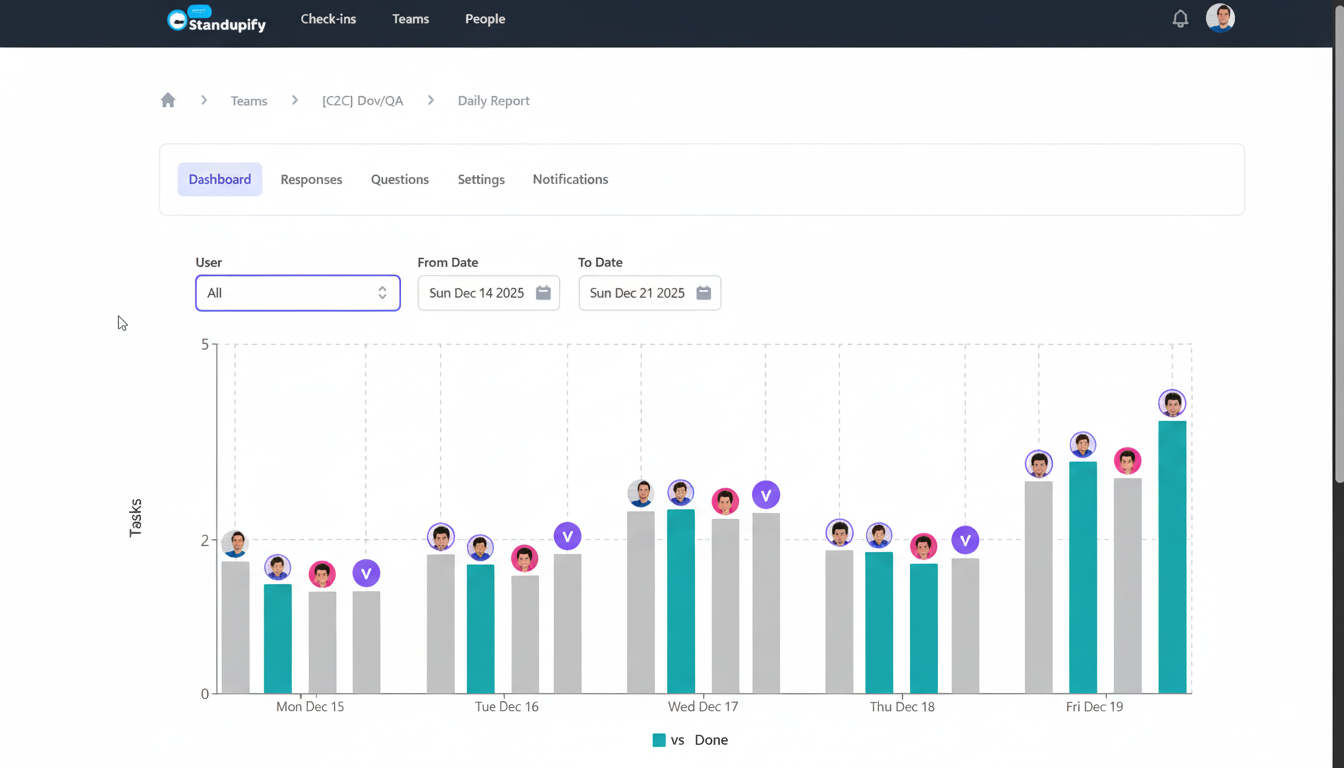
- Review responses: As the Agile Coach, you can review all responses in the Daily Report Dashboard, identify common themes, and prioritize discussion points *before* the live meeting.
The Impact: Pre-gathering retro data asynchronously saves an average of 30-45 minutes per retrospective meeting. This shift allows your live meeting to start directly with analysis and action planning, rather than data collection.
2. Focus Live Meetings Exclusively on Solutions and Action Items
With all the feedback collected asynchronously, your live retrospective meeting can be dramatically shorter and more effective. Your agenda shifts from "What happened?" to "What are we going to do about it?"
- Summarize key themes: Briefly present the aggregated feedback from Standupify.
- Timebox discussions: Allocate strict time limits for discussing the most critical issues identified. Focus on understanding *why* problems occurred and brainstorming potential solutions.
- Prioritize: If there are many issues, use a quick prioritization method (e.g., dot voting, fist-of-five) to decide which 1-3 items to focus on for the sprint.
3. Prioritize and Vote on Outcomes
Once you've discussed potential solutions, it's time to commit to concrete actions.
- Brainstorm actions: For each prioritized issue, brainstorm specific, measurable, achievable, relevant, and time-bound (SMART) action items.
- Vote for commitment: Have the team vote on which action items they commit to implementing in the upcoming sprint. This ensures buy-in and shared responsibility.
- Assign owners and deadlines: Clearly assign an owner to each action item and set a realistic deadline for completion.
4. Keep it Short and Sweet
By front-loading the data collection, your live retrospective can be significantly shorter. Aim for 60-90 minutes, even for larger teams. A concise meeting respects everyone's time and keeps energy levels high.
5. Follow Through for Continuous Improvement
A retrospective is only as good as its follow-through. Ensure that the action items are visible, tracked, and discussed in subsequent daily standups or team meetings. This reinforces the value of the retrospective process and fosters a culture of continuous improvement.
By implementing these strategies, especially by leveraging Standupify for asynchronous preparation, you'll find your sprint retrospectives become more efficient, more engaging, and ultimately, far more actionable, doubling the number of actionable ideas your team generates.
Frequently asked questions
How does Standupify help shorten sprint retrospectives?
Standupify enables asynchronous data gathering through customizable Google Chat check-ins. Teams can share their feedback on 'what went well' and 'what could be improved' *before* the live meeting, saving valuable meeting time for discussion and action planning.
What kind of questions can I set up in Standupify for a retro check-in?
You can customize your Standupify check-in questions to prompt team members for retro-focused insights, such as 'What went well this sprint?', 'What could we improve for the next sprint?', 'What puzzles or challenges did we encounter?', or 'Any ideas for process improvements?'
How much time can we realistically save with asynchronous retro prep?
By pre-gathering retro data asynchronously, teams typically save an average of 30-45 minutes per retrospective meeting. This allows the live session to be significantly more focused on solutions and action items, often doubling the number of actionable ideas generated.
Can Standupify help track the action items generated from a retrospective?
While Standupify is excellent for collecting initial feedback and daily standup reports, tracking specific retro action items (beyond daily tasks) is generally best managed within your dedicated project management tool, such as Jira, which Standupify integrates with for daily reporting.